
What Causes Air Pollution? Top 10 Major Sources Affecting Human Health
3/8/20268 min read
Introduction to Air Pollution
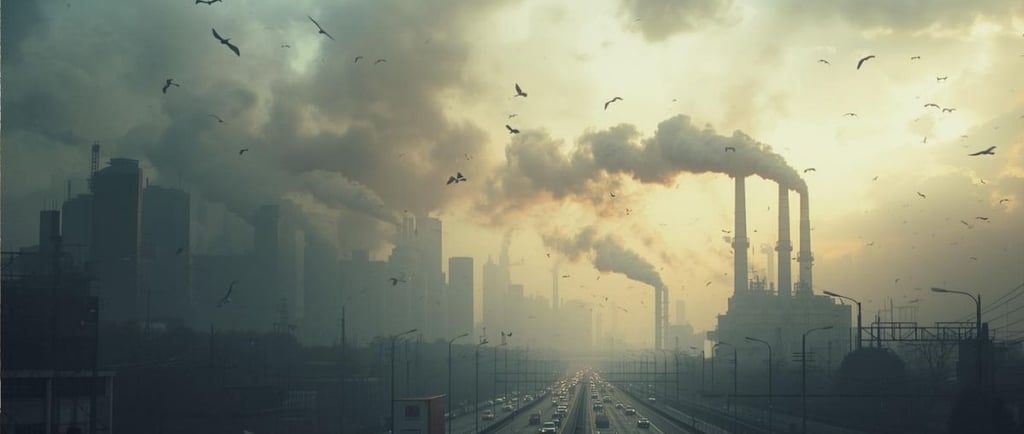
Air pollution is defined as the presence of harmful substances in the atmosphere that can adversely affect human health and the environment. This phenomenon has become a critical global issue affecting the quality of air we breathe, with implications that extend beyond mere inconvenience. Air pollution is not limited to any particular region but is a widespread challenge that threatens ecosystems, contributes to climate change, and poses significant health risks to populations worldwide.
Various factors contribute to the increasing levels of air pollution, ranging from industrial emissions, vehicle exhaust, agricultural practices, and household activities, such as the burning of fossil fuels. The combination of these activities results in a complex mixture of pollutants, including particulate matter (PM), nitrogen oxides (NOx), sulfur dioxide (SO2), and volatile organic compounds (VOCs). Each of these pollutants has unique sources and characteristics, yet they collectively contribute to an escalating public health crisis.
The impacts of air pollution on health are profound and well-documented. According to the World Health Organization, outdoor air pollution is responsible for millions of premature deaths each year due to diseases such as respiratory infections, lung cancer, and heart diseases. Beyond health, air pollution also affects the environment, leading to phenomena like acid rain, which can damage forests, soil, and water bodies. Moreover, air pollution plays a significant role in climate change, as many pollutants are greenhouse gases that trap heat in the atmosphere, further exacerbating global warming.
Understanding air pollution is crucial for developing effective strategies to mitigate its effects and improve air quality. By examining its causes and consequences, stakeholders can work towards solutions that encompass policy change, innovation in technology, and greater public awareness, ultimately fostering a healthier planet for future generations.
Vehicle Emissions: The Substantial Contributor
Vehicle emissions have long been identified as a significant contributor to air pollution worldwide, affecting both environmental quality and public health. The transportation sector, which includes cars, trucks, and buses, is responsible for approximately 14% of global greenhouse gas emissions. Furthermore, it contributes to over 40% of nitrogen oxides (NOx) and around 30% of particulate matter (PM) pollution in many urban areas. These pollutants severely compromise air quality, leading to increased health risks for vulnerable populations.
Among the numerous pollutants emitted by vehicles, nitrogen oxides and particulate matter are particularly concerning. Nitrogen oxides, produced from fuel combustion, react with other substances in the atmosphere to form smog and ground-level ozone, both of which are harmful to respiratory health. Particulate matter, on the other hand, consists of tiny particles that can penetrate deep into the lungs, causing cardiovascular diseases and exacerbating conditions such as asthma. Research indicates that long-term exposure to these pollutants is linked to premature mortality and various chronic illnesses.
To combat these adverse effects, several preventive measures and technologies have emerged. Governments around the world have implemented stringent emissions regulations aimed at reducing harmful emissions from vehicles. These include the adoption of cleaner fuels, improving fuel efficiency standards, and promoting electric and hybrid vehicles, which produce no tailpipe emissions. Additionally, advances in catalytic converter technologies have significantly reduced NOx and PM emissions from conventional internal combustion engines. Public transportation systems are being enhanced to offer more environmentally friendly options, encouraging reduced reliance on personal vehicles. By implementing these measures, it is crucial to address the challenges posed by vehicle emissions while promoting a sustainable future.
Industrial Smoke: A Major Factor in Air Quality
Industrial activities significantly contribute to air pollution worldwide, primarily through the emission of harmful pollutants. Factories and manufacturing plants release a variety of substances into the atmosphere, with sulfur dioxide (SO2) and volatile organic compounds (VOCs) being among the most prevalent. Sulfur dioxide, primarily generated from the burning of fossil fuels in power plants and industrial processes, is known to contribute to respiratory problems and acid rain. On the other hand, VOCs, which are emitted from a range of sources including paint, solvents, and fuel combustion, play a critical role in the formation of ground-level ozone and smog, posing additional health risks.
According to the World Health Organization (WHO), industrial emissions are responsible for a substantial portion of the air quality degradation experienced in urban and suburban areas. Reports indicate that about 20% of premature deaths from respiratory diseases can be attributed to air pollution, with industrial emissions being a key contributor. Specifically, in regions with higher industrial activity, such as metropolitan centers, air quality can severely deteriorate, leading to significant health issues, including chronic bronchitis, asthma, and cardiovascular diseases.
In response to the growing concern regarding air pollution, various regulations have been introduced worldwide to limit industrial emissions. For instance, the U.S. Environmental Protection Agency (EPA) has established the Clean Air Act, which mandates strict emission standards for industries. Additionally, many industries are adopting innovative technologies and strategies to minimize their environmental footprint. This includes investing in cleaner production processes, utilizing scrubbers to extract harmful pollutants, and shifting towards sustainable energy sources. As industries continue to innovate, there is hope for a noticeable reduction in air pollution, improving overall air quality and public health.
Construction Dust: An Overlooked Source of Pollution
Construction activities are essential for urban development, yet they often generate significant amounts of dust and particulates that contribute to air pollution. These emissions arise from a variety of sources, including demolition, excavation, and material handling processes. Construction sites can release fine particulate matter (PM10 and PM2.5), which can be harmful to both the environment and human health.
The inhalation of construction dust can lead to adverse health effects, particularly respiratory issues. Prolonged exposure to particulate matter may exacerbate conditions such as asthma, bronchitis, and other chronic respiratory diseases. Additionally, these particles can contain harmful substances, including silica, which is known to cause silicosis—a serious lung disease. The health repercussions of construction dust are often overlooked, even though it poses a critical risk to both workers and nearby residents.
To mitigate the influence of construction dust on air quality, several dust suppression techniques can be implemented. One effective method is the use of water sprays that reduce dust emissions during earth-moving activities. Additionally, the application of chemical dust suppressants can help stabilize surfaces and minimize airborne particulates. Construction companies should also consider employing enclosures and barriers to contain dust within work zones.
Moreover, regulatory frameworks can play a vital role in controlling dust emissions. Governments can establish stricter guidelines for construction practices, mandating measures like proper site management, scheduled watering of exposed surfaces, and the appropriate handling of materials. Compliance with these regulations can not only improve air quality but also safeguard the health of the community and construction workers alike.
In conclusion, construction dust is an often-overlooked facet of air pollution that requires immediate attention. By adopting effective dust suppression strategies and adhering to relevant regulations, the construction industry can contribute significantly to reducing air pollution and protecting public health.
The burning of fossil fuels remains one of the primary contributors to air pollution across the globe. Energy production from coal, oil, and natural gas not only meets the vast majority of our energy needs but also releases significant quantities of harmful pollutants into the atmosphere. According to the International Energy Agency, fossil fuel combustion accounts for over 70% of global greenhouse gas emissions. This dire statistic highlights the urgency of addressing the energy crisis associated with air quality.
When fossil fuels are burned, they release a variety of pollutants, including sulfur dioxide (SO2), nitrogen oxides (NOx), particulate matter (PM), and volatile organic compounds (VOCs). These substances contribute to the formation of ground-level ozone and smog, which can lead to severe respiratory issues, cardiovascular diseases, and even premature death. In fact, the World Health Organization reports that outdoor air pollution is responsible for approximately 4.2 million premature deaths each year globally, with the majority of these fatalities linked to the inhalation of pollutants generated from fossil fuel combustion.
Moreover, air quality degradation does not solely affect human health; it has significant implications for the environment as well. Acid rain resulting from SO2 emissions can harm aquatic ecosystems and damage terrestrial vegetation. Furthermore, particulate matter can obscure visibility and contribute to climate change by affecting the Earth’s radiative balance.
To combat these issues, transitioning to renewable energy sources such as solar, wind, and hydroelectric power has emerged as a viable solution. These alternatives produce little to no emissions and have the potential to significantly reduce air pollution linked to fossil fuel usage. Governments and organizations worldwide are investing in clean energy initiatives, recognizing that moving away from fossil fuels is essential for achieving sustainable air quality and protecting public health.
Agricultural Chemicals: Impact on Air Quality
Agricultural practices have long relied on chemicals, notably fertilizers and pesticides, to enhance crop yields and manage pests. However, the extensive use of these substances is a significant contributor to air pollution. The process by which these chemicals enter the atmosphere is primarily through volatilization and drift, whereby certain compounds evaporate or are carried by wind away from their intended application site, leading to widespread dispersal.
Volatilization occurs when chemicals, particularly nitrogen-based fertilizers, turn into vapors and subsequently release into the air. These airborne chemicals can travel vast distances, impacting neighboring ecosystems and affecting air quality. Pesticides, too, can drift from fields during application, influenced by wind currents. This drift not only affects non-target areas but also poses serious health risks to communities in proximity to agricultural operations.
The negative implications for human health from exposure to airborne agricultural chemicals are of growing concern. Prolonged exposure can lead to respiratory issues, neurological disorders, and other chronic health conditions. Vulnerable populations, such as children and the elderly, are particularly at risk. Besides human health, these chemicals can also harm wildlife and disrupt local ecosystems, ultimately leading to a reduction in biodiversity.
To address the impact of agricultural chemicals on air quality, several sustainable agricultural practices can be implemented. These include integrated pest management (IPM) strategies, which focus on utilizing biological controls and less harmful pesticides, and precision agriculture technologies that optimize the use of fertilizers and pesticides. Additionally, adopting organic farming practices can significantly reduce reliance on synthetic chemicals, thus improving overall air quality. By making informed, sustainable choices, farmers can mitigate air pollution caused by agricultural chemicals while maintaining productivity.
Indoor Air Pollution: The Invisible Danger
Indoor air pollution is a critical yet often overlooked issue that poses significant health risks to individuals and families. Many people are unaware that the air quality within their homes can be compromised by a variety of sources. Common contributors include household cleaners, mold, cooking emissions, and a lack of adequate ventilation. Household cleaning products, for instance, can release volatile organic compounds (VOCs) that may lead to respiratory problems and other health concerns. Furthermore, mold can thrive in damp areas, releasing spores that contribute to allergic reactions and respiratory issues.
The prevalence of indoor air pollutants is alarming. Studies have shown that indoor air can be significantly more polluted than outdoor air, with levels of some pollutants being two to five times higher. According to the U.S. Environmental Protection Agency (EPA), indoor air quality is a major environmental health concern that requires immediate attention. The health impacts associated with indoor air pollution can range from minor irritations, such as headaches and fatigue, to more severe conditions like asthma and lung disease.
Improving indoor air quality is attainable with practical measures. Firstly, enhancing ventilation by opening windows and using exhaust fans can help dilute and disperse indoor pollutants. Additionally, opting for natural cleaning products can reduce the overall emission of harmful chemicals into the air. Regular maintenance, such as checking for mold growth, cleaning air ducts, and using air purifiers, can further contribute to a healthier indoor environment. By taking these proactive steps, individuals can mitigate the risks associated with indoor air pollution, promoting better health and well-being for themselves and their families.
The Link Between Climate Change and Air Pollution
Air pollution and climate change are intrinsically linked global challenges that share a complex relationship, characterized by their mutual influence on atmospheric conditions. Various pollutants, including greenhouse gases such as carbon dioxide (CO2) and methane (CH4), play a significant role in contributing to climate change. These gases trap heat in the atmosphere, leading to rising global temperatures, which are symptomatic of climate change. Conversely, climate change exacerbates air pollution levels, as changing weather patterns can affect the dispersion and concentration of pollutants.
Furthermore, particulate matter (PM) and ozone pollution are known to have detrimental health effects, which are intensified under conditions of climate change. For instance, elevated temperatures can exacerbate smog formation, increasing the frequency and severity of air quality alerts. This poses serious public health risks, particularly in urban areas where pollution is already prevalent. Addressing air pollution thus contributes to climate action by reducing the emissions that cause both issues, resulting in a synergistic effect known as co-benefits.
Implementation of air quality initiatives can enhance climate action strategies. For example, policies that reduce emissions from transportation and industrial sources simultaneously improve air quality and mitigate climate change by decreasing the amount of greenhouse gases released into the atmosphere. Therefore, integrating air quality management with climate policy can cultivate a holistic approach, benefitting both human health and the environment. Individuals and communities are encouraged to become involved in local efforts to combat both air pollution and climate change, recognizing that both pose significant threats to the planet and public health.
Address:
264/5, Kamal Soroni Road, Mirpur, Dhaka-1216
Contact
Your Quaries on pest control askings
pestexterminatorbd@gmail.com
+8801642008383 +8801988300003, 01723057746
© 2025. All rights reserved. to Urban Pest Control Pvt. Ltd. this site is powered by Our Own IT Team