
Water Treatment Methods: How Modern Technology Removes Pollution from Water
3/8/20268 min read
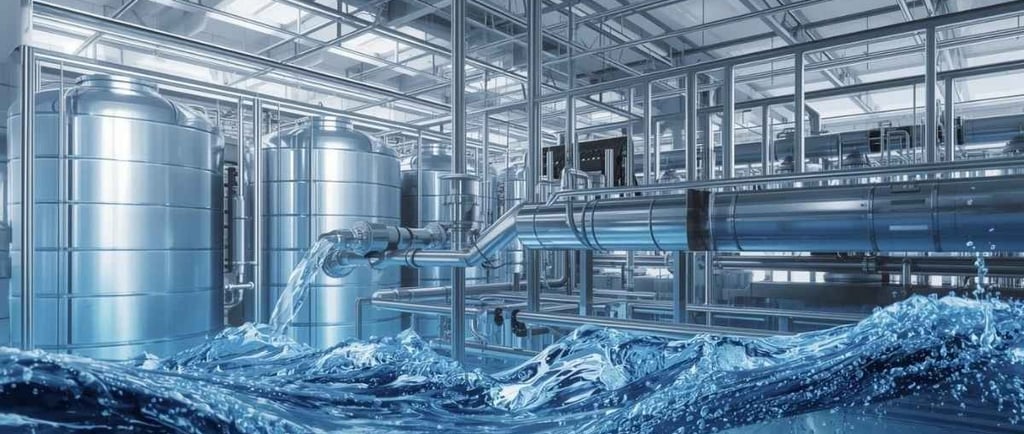
Introduction to Water Treatment Technologies
Water treatment technologies encompass a wide range of processes and methods aimed at improving the quality of water by removing contaminants and ensuring its safety for human consumption and environmental sustainability. As communities grow and industrial activities expand, the challenge of ensuring access to clean and safe drinking water has become increasingly significant. The introduction of advanced water treatment technologies plays a crucial role in addressing these challenges, allowing for the purification of water sources that may be compromised by pollutants or resource scarcity.
The importance of implementing effective water treatment processes cannot be overstated. With contamination stemming from various sources, including agricultural runoff, industrial discharges, and urban waste, there is a growing need for innovative solutions that can efficiently address these issues. Advanced technologies such as membrane filtration, ultraviolet (UV) disinfection, and advanced oxidation processes are just a few examples of the methods currently employed to achieve high-quality water treatment.
Moreover, the increasing frequency of water scarcity in many regions of the world necessitates the exploration of more efficient and sustainable practices. Not only do advanced water treatment technologies enhance the purification process, but they also offer solutions for water recycling and recovery, ensuring that water resources are managed wisely. As populations continue to surge and climate change impacts water availability, the understanding and appreciation of these advanced technologies become paramount.
This guide will delve into the various advanced water treatment technologies, examining their principles, applications, and the implications they hold for the future of water security. By the end of this post, readers will gain a thorough understanding of the crucial role that water treatment technologies play in safeguarding public health and preserving our vital water resources.
Filtration Methods: The First Line of Defense
Filtration is an essential process in advanced water treatment technologies, serving as the first line of defense against contaminants. The primary types of filtration methods include mechanical filtration, sedimentation, and membrane filtering, each with distinct principles, applications, advantages, and limitations.
Mechanical filtration employs physical barriers, such as screens or filters, that capture larger particles from water. This method is particularly effective in removing sediments, debris, and other sizable pollutants. Mechanical filters can be found in various sizes, from simple strainers used in household systems to complex systems in municipal water treatment plants. The advantage of this method lies in its simplicity and low operational costs; however, the efficiency depends on the pore size and may not effectively remove smaller contaminants.
Sedimentation is another fundamental filtration method that facilitates the settling of suspended solids through gravitational forces. In this process, water is held in a tank where heavy particles settle at the bottom, allowing cleaner water at the surface to be drawn off. This method is widely employed in large-scale water treatment facilities, as it is highly efficient for removing turbidity and particulates. Nevertheless, it may require significant space and may not remove dissolved contaminants without subsequent treatment.
Membrane filters have emerged as vital components in modern water treatment due to their ability to separate contaminants based on size or charge. Available as microfiltration, ultrafiltration, nanofiltration, and reverse osmosis, membrane filtration can effectively target a wide range of unwanted materials, including bacteria, viruses, and even dissolved salts. While highly efficient, the membrane systems usually entail higher operational expenses and require regular maintenance.
Understanding these filtration methods lays the groundwork for appreciating their role in comprehensive water treatment strategies. Each technique plays a critical role, often used in conjunction with other processes to ensure that treated water meets safety and quality standards.
Reverse Osmosis (RO): Purifying Water at the Molecular Level
Reverse Osmosis (RO) is a water purification technology that effectively removes a wide array of contaminants, including ions, molecules, and larger particles, by pushing water through a semipermeable membrane. This membrane acts as a barrier, allowing only water molecules to pass through while filtering out impurities such as salts, bacteria, and heavy metals. The process is particularly efficient in desalination, making it an ideal choice for providing safe and clean drinking water, especially in areas affected by saline water sources.
The operation of reverse osmosis unfolds in several precise steps. Initially, water is pre-treated to remove larger particles and chlorine, which can damage the RO membrane. After pre-treatment, water is then pressurized to allow it to flow through the semipermeable membrane. The unique design of the membrane enables the separation of contaminants based on size and charge, thus ensuring only purified water emerges on the other side.
The applications of RO technology can be categorized into residential and industrial settings. In residential areas, RO systems are frequently integrated into home water filtration solutions, providing families with high-quality drinking water efficiently. In industrial applications, reverse osmosis is employed in various sectors such as food and beverage, pharmaceuticals, and municipal water treatment plants, where the demand for purified water is crucial. These systems not only enhance water quality but also contribute to sustainable practices in water management by allowing for the reuse and recycling of water.
In conclusion, the reverse osmosis process stands as a critical advancement in water treatment technology. Its ability to purify water at the molecular level ensures that contaminants are effectively removed, supporting public health and environmental sustainability.
Understanding UV Purification in Water Treatment
Ultraviolet (UV) purification is an innovative method employed in advanced water treatment technologies to ensure water safety and quality. The principle behind this method is straightforward yet effective: UV light serves as a powerful disinfecting agent that inactivates harmful microorganisms present in water. This is achieved through targeted exposure to UV radiation, specifically in the wavelength range of 200 to 300 nanometers. When microorganisms such as bacteria, viruses, and protozoa are exposed to UV light, their DNA or RNA is disrupted, rendering them incapable of reproduction and neutralizing their potential to cause illness.
One of the remarkable features of UV purification is its rapid effectiveness. Unlike traditional chemical-based disinfection methods, which can take time to act, UV purification requires only a matter of seconds to achieve substantial disinfection. This not only enhances the efficiency of water treatment processes but also minimizes the deployment of chemicals, which can introduce secondary contaminants into the water supply.
Furthermore, the chemical-free nature of UV purification offers a significant advantage for those seeking sustainable and environmentally friendly water treatment options. By utilizing light rather than chemical agents, UV systems can promote a cleaner approach to disinfection, reducing the likelihood of producing harmful byproducts associated with chemical treatments.
Additionally, UV purification effectively fits into integrated water treatment systems. It serves as an excellent supplementary treatment option alongside conventional methods, providing an extra layer of protection against microorganisms. This holistic approach is crucial for ensuring that water quality meets regulatory standards and public health requirements, especially in regions where contamination risks are higher.
Activated Carbon Filtration: Removing Impurities and Odors
Activated carbon filtration is a widely used technique for improving water quality by effectively removing impurities and undesirable odors. This is achieved through a process known as adsorption, where contaminants adhere to the surface of activated carbon particles. The activated carbon used in filtration is treated to create a porous structure, which dramatically increases its surface area. This high porosity makes activated carbon exceptionally effective at capturing a variety of contaminants, including chlorine, sediment, and volatile organic compounds (VOCs).
Chlorine, commonly used as a disinfectant in municipal water supplies, can impart a strong taste and odor to the water. Activated carbon filters are particularly adept at removing chlorine, thereby not only improving the taste but also making the water more palatable. Moreover, sediment particles that may cause turbidity in the water are also trapped within these carbon filters, leading to clearer water.
There are several types of activated carbon filters available on the market, each designed to cater to specific needs. Granular activated carbon (GAC) filters are often used for point-of-use applications, while block carbon filters can offer reduced water flow but provide superior adsorption capabilities due to the increased contact time. Furthermore, some filters are designed to target specific contaminants such as chlorine or VOCs, while others are more versatile, capable of removing a wider range of impurities.
The effectiveness of activated carbon in improving water taste and quality has been demonstrated through numerous studies, indicating that this method can significantly reduce the concentrations of harmful substances. Proper maintenance and timely replacement of carbon filters are crucial for sustained performance, as exhausted filters can lead to a decrease in water quality over time. Understanding the mechanisms and types of activated carbon filtration is essential for selecting the right water treatment system to meet specific needs.
Wastewater Treatment Plants: Processing Used Water Safely
Wastewater treatment plants (WWTPs) play an indispensable role in safeguarding public health and protecting the environment by ensuring that both municipal and industrial wastewater is treated prior to its release back into natural water bodies. These facilities utilize a multi-step treatment process that consists of physical, biological, and chemical treatments to effectively remove contaminants from used water.
The first step in wastewater treatment is the physical treatment phase, which primarily focuses on the removal of large solids and debris. This involves screening and sedimentation processes. During screening, screens or meshes capture larger materials such as plastics, leaves, and other debris, which could damage equipment or hinder subsequent treatment processes. Following this, the wastewater flows into sedimentation tanks, where gravitational forces allow suspended solids to settle at the bottom, forming sludge while clearer water rises to the surface.
Next, the biological treatment stage begins, wherein microorganisms play a crucial role in breaking down organic matter present in the wastewater. This stage often occurs in aeration tanks where air is supplied to promote the growth of bacteria. These beneficial organisms consume organic pollutants, converting them into harmless byproducts, and ultimately reducing the biological oxygen demand (BOD) of the effluent.
Finally, once biological treatment is complete, the wastewater undergoes chemical treatment. This phase may include disinfection processes using chlorine or ultraviolet light to eliminate any remaining pathogens and ensure that the treated water meets regulatory standards for safe discharge. By employing these advanced treatment technologies, WWTPs contribute significantly to the sustainable management of water resources and play a vital role in promoting ecological balance.
Biological Treatment Systems: Nature’s Way of Cleaning Water
Biological treatment systems represent a sustainable and effective method for purifying wastewater by harnessing the natural processes of microorganisms. These systems primarily focus on breaking down organic substances in wastewater, which can otherwise impede the quality of water resources. By utilizing a diverse array of microbial populations, biological treatment processes efficiently decompose organic matter, thus playing a pivotal role in the overall water treatment hierarchy.
One of the most widely recognized methods within biological treatment is the activated sludge process. This technique involves aerating wastewater in the presence of microorganisms, allowing them to consume organic impurities. As a result, the process not only reduces the organic load but also enhances the dissolved oxygen levels in the water, contributing positively to the environment. The effective retention of microorganisms in this system assists in achieving higher rates of pollutant removal compared to other methods.
Another prevalent biological treatment method is the trickling filter system. This system consists of a media bed where microorganisms live and thrive. Wastewater is distributed over this media, allowing it to trickle down while the microbes attach to it and degrade the contaminants. This system is particularly effective for treating low-strength wastewater and can efficiently remove nutrients such as nitrogen and phosphorus, which are essential to prevent eutrophication in receiving water bodies.
Additionally, biofilm reactors serve as an advanced alternative, wherein a biofilm of microorganisms develops on the surface of carriers submerged in wastewater. This configuration enhances mass transfer and boosts the degradation of organic pollutants. Given their ability to handle varying organic loads and improve nutrient removal efficiency, biological treatment systems continue to be essential in modern water treatment facilities, offering a natural yet powerful solution for water purification.
Smart Water Purification Technology: The Future of Clean Water
As water scarcity and contamination remain pressing global challenges, innovative solutions are paramount for sustainable management. One of the most promising advancements in this area is smart water purification technology, which integrates Internet of Things (IoT) applications, artificial intelligence (AI), and automation to enhance water treatment processes.
By leveraging IoT, smart water purification systems can provide real-time monitoring of water quality. These systems utilize sensors to detect contaminants and assess water parameters, such as pH levels, turbidity, and microbial presence. The ability to monitor these factors instantaneously allows for quick responses to water quality issues, thereby safeguarding public health.
Moreover, AI algorithms play a pivotal role in predicting potential contamination events and optimizing treatment processes. Through data analysis and machine learning, AI can discern patterns from historical data, enabling systems to foresee and mitigate risks before they escalate. This predictive maintenance capability not only enhances system reliability but also reduces operational costs, as maintenance can be scheduled proactively based on real-time insights.
Automation also contributes significantly to the efficiency of treatment facilities. Automated systems can manage water purification processes with minimal human intervention, ensuring consistent quality control and reducing the likelihood of human error. These advancements together create a comprehensive approach to water management, where smart technologies interact to provide safe, clean water.
In addition to their practical benefits, smart water purification technologies hold the potential to address broader global water challenges. By increasing the accessibility of clean water, especially in underserviced regions, these innovations can mitigate the socioeconomic impacts of water scarcity and enhance quality of life.
Address:
264/5, Kamal Soroni Road, Mirpur, Dhaka-1216
Contact
Your Quaries on pest control askings
pestexterminatorbd@gmail.com
+8801642008383 +8801988300003, 01723057746
© 2025. All rights reserved. to Urban Pest Control Pvt. Ltd. this site is powered by Our Own IT Team