
Low-Cost Activated Carbon Mask Manufacturing in Bangladesh
3/30/20268 min read
Importance of Respiratory Masks
Respiratory masks play a crucial role in enhancing public health and safety by providing a barrier against airborne pollutants, viruses, and harmful particulates. In the face of increasing environmental concerns and global health crises, such as pandemics, the demand for effective respiratory protection has never been more pronounced. Masks are essential in minimizing transmission risks associated with respiratory infections, which can be easily spread in crowded urban areas or during public gatherings.
The significance of affordable respiratory masks becomes evident in regions like Bangladesh, where many individuals may lack access to high-quality protective gear. By utilizing locally sourced materials for manufacturing these masks, communities can benefit from cost-effective solutions that do not compromise on quality. Manufacturing masks at a low cost not only addresses health needs but also stimulates local economies and employment, fostering sustainable practices within the community.
Local production of respiratory masks can pave the way for innovation in design and functionality, ensuring that the products are tailored to meet the specific needs and preferences of the population. Furthermore, the use of indigenous materials can boost local industries and reduce reliance on imported goods, contributing to self-sufficiency. This approach is essential for improving public health outcomes, especially in lower-income countries, as it allows for greater access to necessary protective equipment.
In moving forward with local manufacturing initiatives, it is imperative to raise awareness about the importance of respiratory masks. Communities should be educated on their correct usage, maintenance, and the vital role they play in safeguarding health. By doing so, we can cultivate a culture of preventive health measures that prioritize the well-being of society at large.
Understanding the Materials: Coconut Shell Carbon, Jute, and Plastic
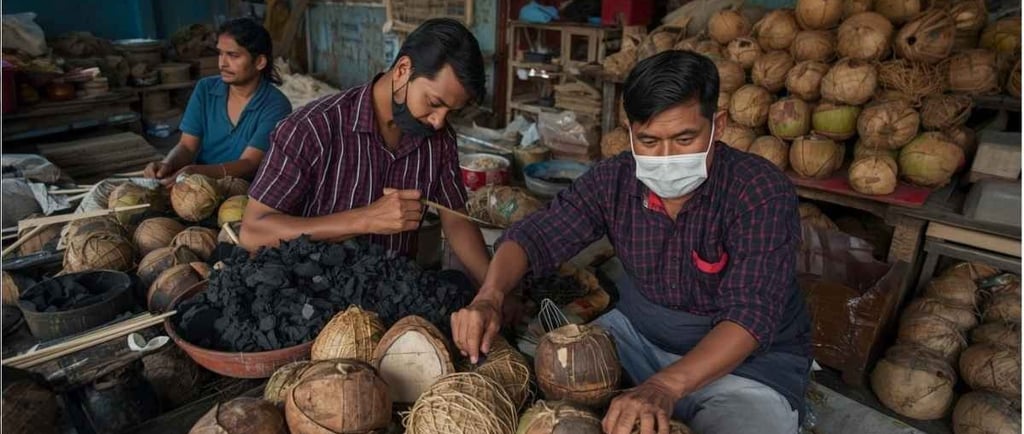
The manufacturing of low-cost respirator masks in Bangladesh relies heavily on locally sourced materials, specifically coconut shell carbon, jute, and plastic. Each of these materials offers unique properties that contribute to the overall effectiveness and sustainability of the masks.
Coconut shell carbon serves as a vital component in the filtration system of the respirator masks. Known for its excellent adsorption capabilities, coconut shell carbon is effective in trapping airborne particles, including dust, smoke, and various pathogens. The porous nature of activated carbon made from coconut shells ensures that it provides a high surface area for adsorption, which is crucial for respiratory protection. Moreover, since coconut is abundant in Bangladesh, sourcing this material locally minimizes costs and environmental impact.
Jute, a natural fiber, is selected for its structural applications within the mask design. This biodegradable material is not only lightweight but also offers durability and breathability, essential attributes for respiratory wear. Jute fibers are strong and can withstand stress, making them suitable for creating a supportive mask structure that does not compromise comfort or functionality. By utilizing jute, the production aligns with sustainability practices and supports local agriculture.
Lastly, local plastic is incorporated into the masks, specifically in the mask body and inner linings. Utilizing recycled plastic minimizes waste and provides an inexpensive alternative that meets the necessary hygiene and structural standards. The adaptability of plastic allows for various designs, enhancing the fitting and usability of the masks, ultimately leading to better user compliance.
Collectively, these materials—coconut shell carbon for filtration, jute for structure, and local plastic for assembly—present an innovative approach to manufacturing respirator masks that are both low-cost and highly functional, signifying a step forward in the local healthcare response.
The Manufacturing Process of Respirator Masks
The manufacturing process of respirator masks utilizing local materials in Bangladesh consists of several key steps, each pivotal to ensuring the final product is effective and safe for use. The first step involves preparing the coconut shell carbon, which serves as an efficient filtration medium. The carbon needs to be activated through a thorough process of heating and treating it, which enhances its porosity and surface area. It is advisable to use a controlled heating environment to avoid impurities that could impair its performance.
The next stage is creating jute layers, which are integral to the mask's structure and comfort. Jute is a natural fiber renowned for its breathability and strength. To prepare the jute, it should be washed to remove any contaminants and then dyed if necessary for aesthetic purposes. Once cleaned, jute fibers are laid out and stacked to form multiple layers, ensuring they provide the requisite filtration while remaining lightweight. Each layer can be bonded using an eco-friendly adhesive that does not compromise the filtration effectiveness.
Subsequently, the assembly of the masks takes place. The activated carbon layer is sandwiched between jute layers and inserted into a pre-formed plastic body. This plastic shell serves as an outer layer, protecting the inner materials from external pollutants and moisture. The layers are secured together using stitches or additional adhesive, ensuring stability and durability during wear. Throughout this process, it is crucial to adhere to safety measures, such as wearing gloves and masks to prevent inhalation of dust from materials and contaminants. Regular sanitization of workspaces and tools also plays a vital role in maintaining production hygiene.
By following these steps, not only can low-cost respirator masks be manufactured, but they can also be created with quality and safety in mind, utilizing abundant local resources available in Bangladesh.
Cost Analysis of Manufacturing Masks Locally
Manufacturing respirator masks in Bangladesh utilizing local materials presents a significant opportunity for cost reduction. The primary components of a typical respirator mask include the filtering material, the outer shell, ear loops, and nose clips. By sourcing these materials locally, manufacturers can significantly lower the expenses associated with transportation and import tariffs, which are often substantial when procuring materials from overseas.
To perform a comprehensive cost analysis, one must examine the material costs. For instance, local producers may have access to cotton and non-woven fabrics at a fraction of the price compared to imported options. The average cost of locally sourced filtering materials is estimated at around $0.20 per mask, as opposed to $0.75 for imported alternatives. This translates into substantial savings, particularly when scaling production.
Labor costs also play a crucial role in the overall expenses of mask manufacturing. In Bangladesh, the average labor cost is significantly lower than in many developed countries, enabling manufacturers to produce masks at a fraction of the price. For instance, labor costs for assembling a mask can be estimated around $0.10 per mask, as opposed to $0.50 in countries with higher minimum wages. The combination of lower material and labor costs has the potential to reduce total production costs to approximately $0.50 per mask.
Moreover, local manufacturing encourages job creation within the community, thus promoting economic growth. By utilizing local resources and labor, manufacturers can produce high-quality respirator masks at competitive prices, thereby providing an affordable solution for health care needs in both domestic and international markets. Ultimately, the shift towards local mask production not only benefits the economy but also enhances accessibility to essential health supplies.
Challenges and Solutions in Local Mask Manufacturing
The manufacturing of low-cost respirator masks in Bangladesh encounters several notable challenges. One of the primary issues is sourcing suitable local materials that meet the necessary safety and health standards for an effective respirator. While Bangladesh has an abundance of textile resources, not all materials are appropriate for filtration purposes. Therefore, manufacturers must engage in comprehensive research and development to identify and test local options that can ensure effective filtration without compromising comfort.
Quality control emerges as another significant challenge in the local production process. Given the wide variability in production capabilities across different manufacturers, ensuring consistent quality is imperative. A lack of structured quality assurance processes can lead to variations in the efficiency of the masks produced, hindering their effectiveness. Establishing standardized protocols and guidelines for local manufacturers can offer a solution, ensuring that each mask produced adheres to established safety requirements.
Distribution also poses a considerable challenge, particularly in reaching remote areas where the demand for respirator masks may be high but access to products is limited. This can result in discrepancies between supply and demand, exacerbating public health concerns. Developing a robust distribution network, including partnerships with local communities and logistics providers, can facilitate improved access to masks. Utilizing technology for inventory management and distribution planning can further optimize these processes, ensuring that the masks reach the communities that need them the most.
In summary, while the local manufacturing of respirator masks in Bangladesh faces significant hurdles, strategic solutions such as material research, quality assurance implementation, and improved distribution mechanisms can promote effective and sustainable mask production. Addressing these challenges effectively will help meet the growing demand for protective equipment in the region.
Case Studies: Successful Examples in Bangladesh
Bangladesh has witnessed a remarkable emergence of local businesses and organizations that have successfully manufactured low-cost respirator masks. These initiatives have not only addressed critical health needs but have also demonstrated innovative approaches to utilizing local materials effectively. Among these success stories is a cooperative known as "Bangla Mask Makers," which primarily focuses on producing masks from readily available cotton fabrics and non-woven materials sourced locally. This initiative was established in response to the acute shortage of personal protective equipment during the COVID-19 pandemic.
The cooperative faced several challenges, including procuring adequate supplies of materials and ensuring the safety of its workers. To overcome these hurdles, they formed partnerships with local suppliers and implemented strict safety protocols in the production facilities. This collaboration not only ensured a steady flow of necessary resources but also supported the local economy by providing jobs and promoting small businesses.
Another notable example is the "Dhaka Craft Collective," which has developed sustainable low-cost respirator masks that combine traditional craftsmanship with modern design. Using bamboo and cotton, the collective has managed to produce durable masks that are not only cost-effective but also environmentally friendly. Their masks have gained significant acceptance among the local population due to their attractive design and breathable quality. The success of this venture has encouraged local artisans to explore similar manufacturing techniques, thereby promoting community resilience and creativity.
These case studies underscore the potential for local ingenuity in addressing public health challenges. The impact of these initiatives extends beyond mere mask production; they foster a sense of community, stimulate local economies, and inspire others to engage in similar endeavors. Through these examples, it becomes evident that utilizing local materials in the manufacturing of low-cost respirator masks can be a viable strategy for both health and economic recovery in Bangladesh.
Future Prospects for Local PPE Manufacturing
The manufacturing sector in Bangladesh is poised for transformation, particularly in the area of personal protective equipment (PPE) production. With recent global health crises underscoring the necessity for effective public health measures, low-cost respirator masks have emerged as a critical component in safeguarding the well-being of communities. This burgeoning focus on local PPE manufacturing not only addresses immediate needs during health emergencies but also highlights the long-term potential for sustainable development in the region.
Local manufacturing of PPE, especially respirator masks, is likely to benefit from continued government support and community engagement, prioritizing the availability of essential supplies. Innovations in materials and production processes will play a vital role in enhancing the quality and affordability of these masks. By leveraging locally sourced materials, manufacturers can significantly reduce costs, making these protective items accessible to a larger portion of the population. Furthermore, aligning production methods with international quality standards can enhance the global competitiveness of Bangladeshi PPE.
Furthermore, the integration of community feedback in the design and production phases can lead to the development of more effective and user-friendly respirator masks. This can involve collaboration with healthcare providers and end-users, ensuring that the masks not only meet safety regulations but also cater to the specific needs of the population. Building a culture of innovation within the local manufacturing sector, supported by education and training programs, will empower a new generation of skilled workers equipped to navigate the complexities of PPE production.
As Bangladesh continues to advance in this sphere, it is crucial to foster collaborations between public and private sectors, alongside non-governmental organizations. Such partnerships can facilitate research and development initiatives, guiding the pathway for improved PPE manufacturing practices. Ultimately, the evolution of low-cost respirator masks within local PPE manufacturing represents a significant opportunity to enhance public health and resilience in the face of future challenges.
Address:
264/5, Kamal Soroni Road, Mirpur, Dhaka-1216
Contact
Your Quaries on pest control askings
pestexterminatorbd@gmail.com
+8801642008383 +8801988300003, 01723057746
© 2025. All rights reserved. to Urban Pest Control Pvt. Ltd. this site is powered by Our Own IT Team