
Japan’s Precision Pest Control Technologies: Clean, Silent & Smart
1/31/20268 min read
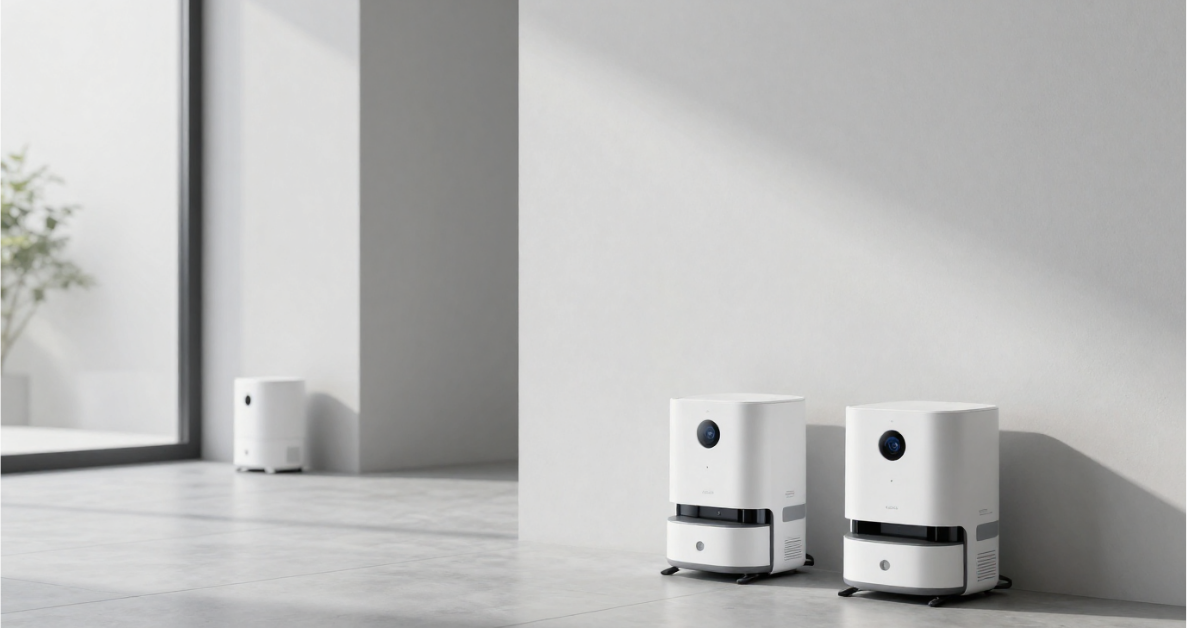
Introduction to Japan’s Pest Control Innovations
In recent years, Japan has emerged as a leader in pest control technologies, reflecting the nation's dedication to maintaining environmental quality and public health. The necessity for advanced pest control solutions has become increasingly apparent due to the unique challenges posed by various urban and rural environments across the country. Notably, Japan’s densely populated areas, coupled with its rich biodiversity, create ideal conditions for pest proliferation, thereby requiring innovative and effective management strategies.
Urban centers in Japan are particularly susceptible to pest issues, such as rodents, cockroaches, and termites, which can threaten food safety and public health. Conversely, Japan’s rural landscapes are not immune to agricultural pests that endanger crop yield and soil health. Consequently, the demand for precision pest control has soared, prompting the development of sophisticated technologies designed to address these challenges with efficacy.
The commitment to cleanliness and efficiency is deeply ingrained in Japanese culture, where a high standard of hygiene is prioritized. This cultural ethos drives the continuous evolution of pest control methods, emphasizing reduced chemical usage and adoption of environmentally friendly practices. As the global community becomes more aware of sustainable development, Japan's advancements in pest management reflect a broader trend toward cleaner and smarter pest control solutions. The integration of technology in these strategies ensures that pest control is not only efficient but also aligned with ecological preservation.
This dedication to innovation positions Japan as a model for other nations facing similar pest control challenges. By utilizing cutting-edge technologies, including digital monitoring systems and automated traps, the country is paving the way for a future where pest management is both effective and minimally invasive, striking a balance between human safety and environmental health.
The Historical Context of Pest Control in Japan
Pest control in Japan has roots that trace back to ancient agricultural practices. Traditional methods emphasized natural solutions, utilizing environmental balance and local fauna to manage pest populations. For centuries, farmers relied on methods such as crop rotation, companion planting, and the introduction of natural predators to prevent infestations. The cultural significance of harmony with nature led to an organic approach to pest management, which still influences current practices.
The Transition to Modern Precision Techniques
Over the years, Japan has witnessed significant advancements in pest control technologies. The post-war era marked a transitional phase where chemical pesticides became prevalent. However, the adverse effects of these chemicals on health and the environment prompted a reevaluation of pest management practices. With a growing awareness of sustainability, there was a concerted effort to integrate precision pest control into agricultural and urban settings. This evolved into the adoption of technology-driven solutions such as smart traps, pheromone lures, and targeted spraying systems that minimize chemical use and enhance effectiveness.
Cultural Attitudes Towards Pest Management
The Japanese perspective toward pest management showcases a blend of tradition and innovation. While modern techniques are embraced for their efficiency, there remains a deep-rooted respect for traditional methods. The emphasis on harmony and eco-friendliness reflects Japanese societal values. This cultural attitude facilitated the acceptance of integrated pest management (IPM) strategies, which harmonize the use of technology with environmentally conscious practices.
Milestones in Pest Control Technologies
Key milestones in the evolution of pest control in Japan include the development of biopesticides and the integration of artificial intelligence in pest monitoring systems. These advancements not only enhance pest management efficacy but also align with Japan's commitment to sustainability. The push towards eco-friendly solutions has led to a reduced reliance on synthetic chemicals, favoring methods that maintain ecosystem integrity while effectively managing pest populations.
Key Technologies Behind Japan’s Precision Pest Control
Japan is at the forefront of developing innovative pest control technologies that demonstrate efficiency and environmental consciousness. Three key technologies stand out in Japan's approach: drones, Internet of Things (IoT) devices, and artificial intelligence (AI)-based monitoring systems.
Drones have revolutionized the way pest control measures are implemented in agricultural settings. These unmanned aerial vehicles are equipped with advanced sensors and camera technologies, allowing operators to survey vast areas quickly and accurately. Drones can identify problem areas where pest populations are high, enabling targeted interventions rather than widespread pesticide applications. This precision not only reduces the amount of chemicals used but also minimizes the impact on surrounding ecosystems, aligning with Japan’s commitment to sustainable agriculture.
IoT devices play a pivotal role in streamlining pest management strategies. These interconnected devices gather real-time data from the environment, such as soil conditions, weather patterns, and pest activity levels. By employing IoT sensors in fields, farmers can receive actionable insights directly on their devices. For instance, if a sensor detects an upswing in pest activity, the farmer can swiftly respond with appropriate measures, effectively curbing infestations before they escalate. This data-driven approach significantly enhances the efficacy of pest control operations while optimizing resource usage.
Finally, AI-based monitoring systems are essential for analyzing the collected data from drones and IoT devices. Through machine learning algorithms, these systems can predict pest behavior and outbreaks with remarkable accuracy. By analyzing patterns and historical data, AI can assist farmers in making informed decisions regarding pest management, which reduces reliance on chemical treatments and promotes long-term sustainability in agricultural practices. This integration of AI into pest control measures further demonstrates Japan's commitment to using cutting-edge technology for effective and responsible pest management.
Environmental Impact and Sustainability Practices
Japan's commitment to sustainability is evident in its innovative approach to pest control. Precision pest control technologies not only enhance pest management efficacy but also prioritize the reduction of chemical usage, thereby aligning with broader environmental sustainability goals. This shift towards a more sustainable practice is largely driven by the nation's recognition of the adverse impacts traditional pest control measures have on the ecosystem.
One significant advancement is the reduction of chemical pesticides. Through precision technology, pest control methods have evolved to become more targeted, minimizing the application of harmful chemicals. These technologies utilize data analysis and monitoring systems to identify pest populations accurately, allowing for the application of pesticides only where necessary. This targeted application dramatically reduces the overall quantity of chemicals released into the environment, contributing to a healthier ecosystem.
In addition to minimizing chemical usage, Japanese pest control practices are focused on protecting biodiversity. Effective pest management is crucial in maintaining ecological balance, as pests can disrupt local flora and fauna. Technologies that prioritize the identification of beneficial insects create a pest control strategy that does not compromise vital species in the ecosystem. By fostering a balance between managing pests and protecting beneficial organisms, these practices ensure sustainable agricultural methods that support both food production and ecological health.
Furthermore, Japan's pest control industries are increasingly embracing eco-friendly alternatives. Innovations such as biopesticides, which are derived from natural materials, have surfaced as viable options. These alternatives pose minimal risks to non-target organisms, contributing to a more sustainable pest management framework. The use of mechanical traps and barriers also exemplifies a shift towards physical pest control measures that do not rely on chemicals, thereby reinforcing sustainability in pest management.
Successful Implementations of Pest Control Technologies
Japan has emerged as a global leader in the development of advanced pest control technologies, demonstrating remarkable effectiveness across various sectors. Case studies reveal how these innovative solutions have been successfully implemented in urban areas, agricultural fields, and public spaces.
One exemplary case involved the use of drones equipped with precision spraying systems in rice paddies in Niigata Prefecture. Farmers faced significant challenges from pests such as the rice borer, which threatened crop yields. By deploying drones, farmers were able to apply insecticides with exceptional accuracy, significantly reducing chemical usage by up to 50%. Not only did this innovation enhance pest control efficiency, but it also aligned with environmentally sustainable practices, reducing the ecological footprint of agriculture.
In urban environments, Tokyo's metropolitan area has introduced automated pest monitoring systems utilizing Internet of Things (IoT) technology. These smart sensors detect the presence of common urban pests such as rodents and insects in real time, alerting pest control services immediately. This proactive approach has led to a substantial decrease in pest populations in treated zones and a notable improvement in public health and safety standards.
Another notable instance involved the introduction of biopesticides in the cultivation of strawberries in Kumamoto Prefecture. Farmers adopted integrated pest management strategies, utilizing beneficial insects alongside biopesticides derived from natural sources to combat pests like aphids. This approach not only minimized chemical residues on fruit but also supported a resurgence of biodiversity in the surrounding ecosystems.
These case studies underscore the versatility and effectiveness of Japan's pest control technologies. Through innovative applications, stakeholders across various sectors are reaping the benefits of cleaner, quieter, and smarter pest management strategies that exemplify the potential of modern technology in achieving sustainable pest control solutions.
Challenges and Future Directions in Pest Control Technology
The pest control industry in Japan faces several challenges that influence the development and application of precision pest control technologies. One significant hurdle is the regulatory framework that governs pesticide usage and safety. Stringent regulations are designed to protect both public health and the environment, but they can also slow down the introduction of innovative pest management solutions. Compliance with these regulations often requires substantial research and financial investment, which can be a barrier, especially for smaller enterprises.
Public acceptance is another critical factor that affects the evolution of pest control technologies. There is a growing concern among consumers regarding the impacts of chemical pest control methods on health and the ecosystem. This public skepticism creates a demand for non-chemical strategies and greener technologies. Companies are increasingly focusing on developing environmentally friendly pest control solutions, yet gaining consumer trust remains a challenge. Effective communication regarding the safety and efficacy of these technologies is essential to improve public acceptance.
Technological limitations also pose challenges. For instance, while automation and smart pest control systems, such as IoT-based devices, are showing promise for enhancing efficiency, they require significant technology integration and initial capital expenditures. The variability in pest behavior and environmental conditions complicates the implementation of these advanced systems, necessitating further research and development.
Looking toward the future, the pest control industry in Japan is poised to witness several trends that may reshape its landscape. Advances in artificial intelligence and machine learning can lead to smarter pest control systems capable of analyzing real-time data to predict pest outbreaks and respond intelligently. The integration of drones for monitoring pest populations and precision treatment applications is also on the horizon. These innovations will play a vital role in addressing the current challenges and redefining the effectiveness of pest control technologies.
Conclusion: The Impact of Innovation on Pest Management
Japan’s advancements in precision pest control technologies signify a transformative leap in pest management practices. Through the integration of intelligent technology, data analytics, and sustainable methodologies, Japan has managed to reshape how pest control is approached, making it more effective and environmentally friendly. The emphasis on clean, silent, and smart solutions demonstrates a commitment to minimizing ecological disruption while ensuring the efficiency of pest management efforts.
Moreover, these cutting-edge technologies have not only improved pest control outcomes but also set a precedent for other nations grappling with pest-related issues. By adopting similar precision techniques, countries can enhance their own pest management strategies, reducing reliance on traditional, often harmful pest control measures. This shift towards innovative methods signifies a collective movement towards sustainability and responsibility in pest management, ensuring the preservation of biodiversity and ecological balance.
As we observe the remarkable results stemming from Japan's pest control innovations, it becomes evident that continued investment in research and development is crucial. The potential for these advanced practices to address existing and emerging pest pressures worldwide is vast. Furthermore, collaboration among various sectors, including governmental, agricultural, and technological entities, is essential to propagate these measures globally.
In conclusion, Japan’s precision pest control technologies not only represent an innovative approach to managing pest populations but also illustrate the profound impact that such advancements can have on global practices. Embracing these technologies can foster a healthier environment and a more sustainable future in pest management, acting as a model for countries worldwide to follow.
Address:
264/5, Kamal Soroni Road, Mirpur, Dhaka-1216
Contact
Your Quaries on pest control askings
pestexterminatorbd@gmail.com
+8801642008383 +8801988300003, 01723057746
© 2025. All rights reserved. to Urban Pest Control Pvt. Ltd. this site is powered by Our Own IT Team