
Integrated Pest Management (IPM) – Modern Pest Control Technology
3/11/20267 min read
Introduction to IPM
Integrated Pest Management (IPM) is a holistic approach to pest control that emphasizes sustainable practices and environmental responsibility. Defined as a strategy that combines different management techniques and practices, IPM aims to minimize pest populations while reducing economic, health, and ecological risks. This method recognizes the complex interactions between pests, their environment, and agricultural practices, which makes it pivotal for effective pest management.
The importance of IPM in sustainable agriculture cannot be overstated. In an era where conventional pest control methods often rely heavily on chemical pesticides, IPM offers a balanced alternative that focuses on prevention and long-term solutions. By utilizing a mix of biological, cultural, physical, and chemical tools, IPM promotes a more resilient agricultural ecosystem that supports biodiversity and minimizes harm to non-target organisms. Farmers who adopt IPM strategies can improve the health of their crops while ensuring that their practices align with environmental conservation efforts.
Furthermore, the benefits of IPM extend beyond environmental considerations to economic factors. By reducing the reliance on chemical inputs, farmers can lower operational costs while still maintaining productivity and yield. This not only enhances profitability but also contributes to consumer demand for sustainably produced goods. As a result, Engaging in IPM practices leads to a win-win situation for farmers and the environment.
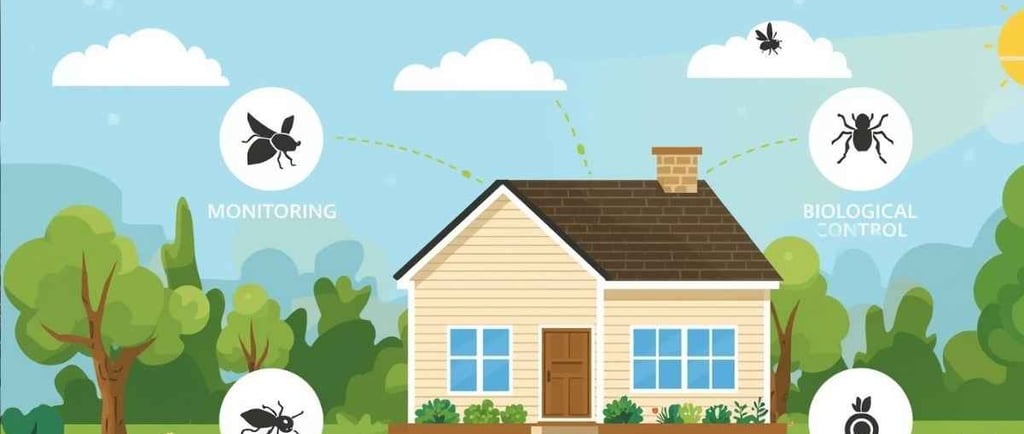
Key principles of IPM include monitoring pest populations, setting action thresholds, and employing a variety of management tactics based on the specific context of the agricultural system in question. Through these guiding principles, IPM delivers a structured and effective framework for pest management that is both proactive and adaptable.
The Importance of Inspection
Inspection plays a pivotal role in the Integrated Pest Management (IPM) strategy, serving as the foundation for effective decision-making in pest control. By thoroughly assessing plants, crops, and their surrounding habitats, farmers and pest management professionals can identify the presence of pests and the extent of their damage. This early detection is essential for implementing timely and targeted interventions, minimizing the need for broad-spectrum pesticides that may harm beneficial organisms and disrupt the ecosystem.
Several types of inspections can be conducted, including visual examinations, trapping methods, and diagnostic assessments. Visual inspections involve closely examining plants and crops for physical signs of pest activity, such as chewed leaves or the presence of droppings. This type of inspection is simple yet effective and can be carried out regularly to monitor pest populations and their impact. Trapping methods, which involve placing devices or attractants to capture pests, provide further insights into pest populations and behaviors. These traps allow for quantitative assessment, enabling the identification of pest hotspots that require attention.
Moreover, employing diagnostic assessments can enhance the inspection process. Testing soil health and plant tissue can reveal underlying health issues that may predispose crops to pest infestations. Understanding the relationship between environmental factors like soil quality and pest prevalence is crucial in formulating a holistic pest management approach.
Overall, by prioritizing thorough inspections within the IPM framework, stakeholders can make informed choices regarding pest management solutions. This proactive approach not only reduces unnecessary interventions but also contributes to healthier ecosystems by preserving biodiversity and ensuring sustainable agricultural practices. Consequently, the significance of detailed inspections cannot be overstated in achieving successful pest management outcomes.
Monitoring for Effective Management
Monitoring is an essential component of Integrated Pest Management (IPM) strategies, serving as a critical tool for the effective management of pest populations. It involves systematically observing and recording pest activity, which informs decisions and interventions that are both timely and informed. By employing various monitoring techniques, practitioners can gain valuable insights into pest behaviors, population densities, and the environmental factors that influence infestations.
One common technique in pest monitoring involves the use of traps. These devices can help in quantifying pest populations and selecting the appropriate control measures. For instance, sticky traps are widely used for monitoring flying insects, allowing for easy identification and estimation of infestation levels. In addition to traps, scouting methods are employed to assess visual signs of pests, such as feeding damage or excrement, providing contextual information about the state of pest populations.
Data collection plays a pivotal role in monitoring for effective IPM. This might include charting pest populations over time or analyzing environmental conditions that correlate with pest outbreaks. By collecting and maintaining accurate records, pest managers can discern patterns and trends, which are instrumental in developing predictive models for future pest activity. Furthermore, the integration of digital technologies, such as mobile apps and software for data analysis, enhances the efficiency of monitoring efforts.
The relationship between monitoring and intervention is quintessential in IPM, as timely data-driven decisions can lead to more sustainable pest management practices, minimizing reliance on chemical controls. By continuously assessing pest dynamics, pest managers can design targeted interventions that reduce both pest populations and the potential environmental impact of pest control measures. Monitoring ensures that pest management strategies remain adaptable, allowing for rapid responses to changing conditions, which is crucial for maintaining ecological balance.
Biological Control: Nature’s Allies
Biological control is an essential component of Integrated Pest Management (IPM), employing natural predators, parasitoids, and pathogens to manage pest populations effectively. By utilizing these beneficial organisms, agricultural and horticultural practices can reduce reliance on chemical pesticides, leading to a more sustainable environment and promoting biodiversity.
One of the primary advantages of biological control is the ability to maintain pest populations below damaging levels without introducing synthetic chemicals. Predators such as ladybugs, lacewings, and predatory mites feed on common pests, like aphids and spider mites, providing a natural method of control. Additionally, parasitoids, which lay their eggs within or on the host pest, can help diminish pest populations by killing the host upon hatching. Pathogens, including certain fungi and bacteria, can specifically target pest species, providing another layer of pest management that is aligned with the IPM philosophy.
Implementing biological control strategies requires careful planning and monitoring. First, it is crucial to identify the pest species present in the area to select appropriate biological agents that can target these pests effectively. Next, releasing these beneficial organisms at the right time can maximize their effectiveness. For instance, introducing ladybugs in the spring when aphid populations begin to rise can lead to successful control early in the season.
Moreover, creating an environment conducive to the survival of beneficial organisms is essential. This can be achieved by planting native flowers that provide nectar and pollen, which support adult predators and parasitoids. Maintaining diverse cropping systems and minimizing the use of broad-spectrum insecticides can also enhance the effectiveness of biological control strategies.
In conclusion, biological control provides a viable alternative to chemical pest management within the Integrated Pest Management framework. By employing these natural allies, growers can not only protect their crops but also promote an environmentally friendly approach to agriculture.
Chemical Control: When and How to Use It
Chemical control plays a significant role in Integrated Pest Management (IPM) strategies, particularly when it is utilized judiciously within a comprehensive pest management framework. Pesticides, the primary agents of chemical control, can be categorized into various types based on their target organisms, including insecticides, herbicides, fungicides, and rodenticides. Each type is designed to effectively combat specific pests, but their application must be carried out with precision and care.
Proper application of chemical control requires thorough knowledge of the pest species, its life cycle, and the stages when it is most vulnerable. Timing is crucial; applying pesticides at the wrong moment can lead to ineffective control and should be avoided to reduce unnecessary chemical use. Additionally, the choice of product should be made based on its efficacy as well as the potential impacts on non-target organisms, including beneficial insects and wildlife. Integrated Pest Management advocates for the use of selective pesticides that cause the least harm to the environment.
It is also essential for users to stay informed about applicable regulations governing pesticide use. Many countries have specific guidelines that dictate the timing of application, the types of pesticides permitted, and necessary safety precautions. Adhering to these regulations not only protects the applicator and surrounding ecosystems but also minimizes the potential for pesticide resistance among pest populations.
Best practices in chemical control include calibrating equipment to ensure accurate dosage, following label instructions rigorously, and employing protective gear during application. It is also advisable to integrate monitoring practices to assess the effectiveness of the chemical control approach and make informed decisions moving forward. Ultimately, the responsible use of chemical methods, combined with cultural and biological control tactics, enhances the effectiveness of IPM strategies while reducing overall environmental impact.
Prevention: The Key to IPM Success
Integrated Pest Management (IPM) emphasizes the significance of prevention in achieving sustainable pest control. Preventive measures are designed to reduce the likelihood of pest infestations before they occur, thus promoting a more holistic approach to pest management. Implementing an effective prevention strategy plays a vital role in preserving ecological balance, contributing to both economic and environmental health.
One of the foremost strategies in pest prevention is crop rotation. By rotating different crops in a specific area, farmers can disrupt the life cycles of pests, preventing them from establishing a stronghold. This method not only helps in diminishing pest populations but also enhances soil fertility and biodiversity. It is advisable to select crops that are not closely related, as this further limits pests that thrive on specific plant families.
Another essential technique is habitat manipulation. This involves altering the environment to make it less conducive for pests while enhancing conditions for beneficial organisms. For instance, maintaining proper irrigation schedules and managing weeds can deter pests from thriving. Moreover, strategically placing physical barriers or traps can protect vulnerable plants from pest attack.
The use of resistant plant varieties is also paramount in preventive pest management. Breeding and selecting resistant strains can significantly reduce the damage caused by pests. Farmers are encouraged to choose varieties known for their resilience, as these plants will require fewer chemical inputs and contribute to sustainable agricultural practices.
To implement these preventive measures successfully, regular monitoring and assessment of crop conditions are crucial. By keeping an eye on pest populations and plant health, farmers can make informed decisions about when to utilize more intensive intervention strategies. Ultimately, well-planned prevention measures within the IPM framework not only address current pest issues but also set a foundation for long-term sustainability in agricultural practices.
Conclusion: The Future of Pest Management
The future of Integrated Pest Management (IPM) is poised to evolve significantly, driven by emerging trends, innovative technologies, and the complexities of ecological challenges. As agricultural practices become increasingly challenged by climate change, urbanization, and the global movement of goods, adapting IPM strategies will be crucial. The incorporation of precision agriculture technologies, such as drones and remote sensing, allows for targeted interventions that can mitigate pest issues more efficiently while minimizing environmental impacts.
Furthermore, the integration of biotechnology in pest management presents new avenues for control, fostering the development of pest-resistant crops and biopesticides that align with IPM principles. As these advancements materialize, the role of stakeholder collaboration becomes paramount. Farmers, researchers, agricultural experts, and policy-makers must work cohesively to develop and implement effective IPM strategies that consider socio-economic factors and environmental sustainability.
Continued education and awareness are also vital in ensuring that current and future practitioners of pest management are well-equipped to adapt to new challenges. There is a pressing need for comprehensive training programs that incorporate the latest IPM research and methodologies, allowing stakeholders to remain agile in their practices. Research institutions will play a pivotal role in driving this education through the development of adaptive research projects addressing regional pest challenges.
As we look to the future, the concept of pest management must transcend traditional approaches, evolving into a responsive system that embraces innovation and collaboration. Only by doing so can the full potential of Integrated Pest Management be realized, ensuring effective pest control while safeguarding our ecosystems and food security.
Address:
264/5, Kamal Soroni Road, Mirpur, Dhaka-1216
Contact
Your Quaries on pest control askings
pestexterminatorbd@gmail.com
+8801642008383 +8801988300003, 01723057746
© 2025. All rights reserved. to Urban Pest Control Pvt. Ltd. this site is powered by Our Own IT Team