
How Air Pollution Can Be Controlled: Modern Air Purification Technologies Explained
3/8/20268 min read
Understanding Air Pollution and its Impact
Air pollution is a critical environmental issue characterized by the introduction of harmful substances in the atmosphere, which can have detrimental effects on human health and the ecosystem. The main sources of air pollution include industrial emissions, vehicular exhaust, burning of fossil fuels, and natural phenomena such as wildfires and volcanic eruptions. With urbanization and industrial growth, the concentration of pollutants has significantly increased, leading to a decline in air quality globally.
Comprehending the sources of air pollution is essential to grasp the scope of its impact. For instance, particulate matter (PM), nitrogen oxides (NOx), sulfur dioxide (SO2), and volatile organic compounds (VOCs) are persistent pollutants resulting from various industrial activities and combustion processes. Over time, these pollutants accumulate in the atmosphere, posing risks to human health and the environment. Individuals exposed to high levels of air pollution are more susceptible to respiratory diseases, cardiovascular illnesses, and, in extreme cases, premature death.
The environmental implications of air pollution are equally alarming. It contributes to climate change by enhancing the greenhouse effect and disrupts ecosystems, leading to biodiversity loss. Water bodies can become contaminated through atmospheric deposition, affecting aquatic life and indirectly impacting human food sources. The degradation of air quality also affects the aesthetic value of natural landscapes and urban habitats.
Given the extent of air pollution's adverse effects, the urgency to develop and implement effective solutions is paramount. Innovative technologies emerge as potential game-changers in this endeavor. By leveraging advancements in technology, we can actively combat air pollution, improve air quality, and mitigate its harmful effects on health and the environment. As we progress through this guide, we will explore various modern technologies implemented to fight against air pollution and their effectiveness in driving change.
HEPA Filters: The Gold Standard of Air Filtration
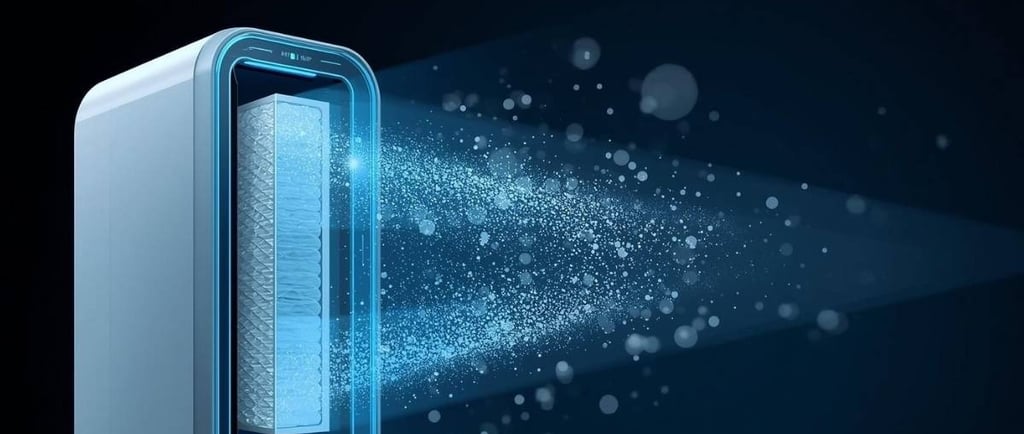
High-Efficiency Particulate Air (HEPA) filters represent a premier solution in the arena of air purification, designed to capture a majority of airborne contaminants. To achieve high levels of filtration efficiency, HEPA filters must adhere to stringent standards, specifically defined by the U.S. Department of Energy. These filters are engineered to trap at least 99.97% of particles that measure 0.3 micrometers in diameter. This particle size is particularly significant, as it is deemed the most penetrating particle size (MPPS), making HEPA filters exceptionally effective in improving indoor air quality.
The functionality of HEPA filters is based on several scientific principles, including diffusion, inertial impaction, interception, and sieving. As air passes through the filter, particles interact with the fibers within the HEPA media. Diffusion captures the smallest particles as they randomly move due to Brownian motion, while inertial impaction captures larger particles that cannot easily navigate the sharp turns in air flow. Interception occurs when particles follow the airstream but come in direct contact with the fibers. Lastly, sieving happens when larger particles are physically blocked from passing through the media by the mesh size of the filter itself.
Because of their ability to effectively reduce airborne particles, HEPA filters are essential in various environments that require clean air, such as hospitals, laboratories, and even residential settings. They help mitigate the risk of inhaling harmful pollutants, allergens, and particulates, thereby fostering healthier living environments. The effectiveness of HEPA filters in capturing particulate matter emphasizes their role in combating air pollution and enhancing overall indoor air quality.
Activated Carbon Filters: Adsorbing Pollutants
Activated carbon filters are an effective technology for combating air pollution, utilizing a mechanism known as adsorption to remove harmful substances from the atmosphere. This process involves the accumulation of gas molecules or vapors on the outer surface of the activated carbon material, which possesses an extensive porous structure. The large surface area of activated carbon enables it to efficiently interact with various pollutants, including volatile organic compounds (VOCs), odors, and other chemical substances found in the air.
When air passes through an activated carbon filter, the pollutants are attracted and adhere to the carbon surface. Activated carbon is produced through the pyrolysis of organic materials, such as wood or coconut shells, followed by activation, which creates numerous micropores and enhances its adsorptive capacity. This unique feature allows activated carbon to capture a broad array of contaminants, effectively reducing harmful air emissions and improving overall air quality.
Activated carbon is particularly proficient at adsorbing VOCs that stem from numerous household products, such as paints, cleaning agents, and adhesives. These compounds can negatively affect indoor air quality and may lead to long-term health issues. Implementing activated carbon filters in home and commercial air purification systems ensures the trapping of these pollutants, thus providing cleaner and safer air for occupants.
Additionally, the filters can be used in various applications, including HVAC systems, industrial exhaust systems, and even portable air purifiers. They are also effective in odor removal, making them a widely used solution for mitigating unpleasant smells in enclosed spaces. With their versatile applications, activated carbon filters play a crucial role in modern technologies aimed at reducing air pollution and promoting healthier living environments.
UV Air Purification: Killing Pathogens with Light
Ultraviolet (UV) air purification systems represent a significant advancement in the fight against indoor air pollution. These systems utilize UV-C light, a specific wavelength of ultraviolet light, known for its germicidal properties. The process hinges on the ability of UV-C light to disrupt the DNA and RNA of microorganisms, rendering them inactive and unable to reproduce, thereby effectively eliminating bacteria, viruses, and mold from the air.
When UV-C light is exposed to airborne pathogens, it penetrates the cell walls and causes irreversible damage to their genetic material. This mechanism not only neutralizes existing harmful microbes but also plays a crucial role in preventing their proliferation. Research has shown that UV-C light can achieve a 99% reduction in pathogens within a short exposure time, demonstrating its effectiveness in maintaining cleaner air environments.
Incorporating UV air purification into existing HVAC systems or as standalone units has become increasingly feasible. Many modern air purifiers integrate UV-C light technology, ensuring that the air circulating throughout a space is continually disinfected. This method of air purification is particularly valuable in settings such as healthcare facilities, where a reduction of airborne infections is paramount. Moreover, residential applications are becoming more common, as individuals seek ways to improve indoor air quality in light of rising health concerns.
However, there are considerations to take into account when using UV air purification systems. Proper installation and maintenance of these systems are essential to ensure their efficacy. While they are effective in killing pathogens, they should not be viewed as a stand-alone solution for air quality issues. Rather, UV air purification works best in combination with other filtration and ventilation methods, creating a comprehensive approach to combating air pollution.
Ionizers: Electrically Charged Innovations
Ionizers, also known as ion generators, are devices designed to improve air quality by emitting electrically charged particles, or ions, into the atmosphere. These charged ions attach themselves to airborne pollutants such as dust, pollen, smoke, and pet dander. By clustering these particles together, the ions increase the size of the pollutants, causing them to settle out of the air, thereby reducing the number of irritants present in indoor environments.
One of the primary advantages of ionizers is their ability to significantly decrease particulate matter in the air. This makes them particularly beneficial for individuals suffering from allergies, asthma, or other respiratory conditions, as cleaner air can facilitate easier breathing and overall well-being. Moreover, ionizers do not require the use of filters, which means lower maintenance costs and less frequent replacements.
However, despite their benefits, there are several potential downsides associated with ionizers. One notable concern is the generation of ozone as a byproduct of the ionization process. Ozone, while beneficial in the upper atmosphere for blocking harmful ultraviolet radiation, can be detrimental to human health when present at ground level in high concentrations. Inhaling ozone can lead to respiratory issues and exacerbate existing health problems. Therefore, it is crucial for users to select ionizers that operate within safe limits of ozone production.
Furthermore, ionizers may not be effective against gaseous pollutants such as volatile organic compounds (VOCs), which are commonly found in household products and can contribute to indoor air pollution. Consequently, it is advisable for individuals seeking to improve air quality to consider using ionizers in conjunction with other air purification technologies to achieve optimal results.
Electrostatic Precipitators: Harnessing Electric Forces
Electrostatic precipitators (ESPs) are advanced devices designed to improve air quality by reducing particulate matter through electrostatic attraction. The working principle of an electrostatic precipitator involves the ionization of air particles. As flue gas containing pollutants enters the ESP, it passes through a high-voltage electric field generated by discharge electrodes. This process imparts a negative charge to the particulate matter present in the gas stream.
Once the particles are charged, they are attracted to positively charged collection plates situated within the device. This separation occurs efficiently, capturing up to 99% of the particulate matter, including dust, smoke, and other contaminants. The effectiveness of electrostatic precipitators in industrial applications is particularly notable, as they can handle high dust loads and accommodate various gas flow rates while maintaining a relatively low-pressure drop across the device. This feature makes them suitable for a wide range of processes, from power plants to cement manufacturing facilities.
Moreover, the environmental impact of utilizing ESPs is significantly positive. By effectively reducing emissions, they contribute to improved air quality, helping to mitigate the adverse health effects associated with air pollution. Additionally, the captured particulates can often be recycled or reused, further promoting sustainability in industrial operations. However, while electrostatic precipitators are highly efficient, their performance may be influenced by factors such as the chemical composition and moisture content of the particles. Therefore, continuous monitoring and maintenance are essential to ensure optimal functioning.
Smart Air Purifier Systems: Integrating Technology and Clean Air
In recent years, smart air purifier systems have emerged as a front-line solution in combating indoor air pollution. These advanced systems leverage cutting-edge technologies such as sensors, Internet of Things (IoT) connectivity, and artificial intelligence (AI) to effectively monitor and enhance indoor air quality in real-time. By utilizing an array of embedded sensors, these purifiers can detect pollutants such as particulate matter, volatile organic compounds, and allergens, providing users with comprehensive insights into the air quality of their environment.
The integration of IoT technology allows smart air purifiers to connect with other smart home devices, creating a cohesive ecosystem aimed at improving health and comfort. Users can easily access air quality data on their smartphones and control their devices remotely, ensuring that air purification occurs precisely when needed. Furthermore, AI algorithms can analyze patterns and make data-driven decisions to adjust filtration settings automatically, ultimately optimizing the purification process without requiring constant manual intervention.
One of the standout advantages of these systems is their ability to adapt to changing conditions in real-time. For instance, if a sudden spike in air pollutants is detected, the smart air purifier can immediately ramp up its filtration intensity. This capability not only enhances the effectiveness of the purification process but also contributes to energy savings, making it a more sustainable option compared to conventional air purifiers.
Moreover, smart air purifiers often come equipped with additional functionalities such as air quality forecasting and maintenance alerts, ensuring they operate at peak efficiency. By harnessing technology in air purification, individuals can make informed choices about their indoor environments, safeguarding their health and well-being. The evolution of these systems marks a significant step forward in the fight against air pollution, highlighting the need for continuous innovation in this critical area.
The Future of Air Purification: AI-Powered Technologies
As air pollution continues to pose a significant threat to public health and the environment, innovative solutions are necessary for mitigating its effects. Artificial intelligence (AI) is emerging as a pivotal tool in the field of air purification, harnessing advanced algorithms and data analytics to enhance traditional air purification systems. The incorporation of AI into air purification technologies holds the potential to significantly improve their efficiency and effectiveness.
One of the foundational elements of AI-powered air purification is the ability to predict air quality levels. By processing vast amounts of data from various sources, including weather patterns, traffic conditions, and industrial activities, AI algorithms can forecast pollution levels in real time. This predictive capability enables purification systems to adjust their operations dynamically, increasing purification output during times of high pollution and conserving energy when air quality is better.
Moreover, AI technology can optimize purification processes by continuously analyzing the performance of air filtration systems. By using machine learning, these systems can learn from their environment and user behavior, enhancing their functionality. For example, AI can determine the most effective filter types or configurations based on the particulate matter and gaseous pollutants present in specific locations. This level of customization ensures that air purifiers operate at their highest potential, minimizing waste and maximizing air quality.
Furthermore, AI can facilitate the integration of various sources and methods of air purification, allowing for a holistic approach to managing air quality. Smart home devices equipped with AI capabilities can communicate with one another, coordinating efforts to optimize indoor air quality alongside outdoor pollution data. This level of interconnectedness in air purification technology could revolutionize our approach to combating air pollution, making it more responsive and efficient than ever before.
Address:
264/5, Kamal Soroni Road, Mirpur, Dhaka-1216
Contact
Your Quaries on pest control askings
pestexterminatorbd@gmail.com
+8801642008383 +8801988300003, 01723057746
© 2025. All rights reserved. to Urban Pest Control Pvt. Ltd. this site is powered by Our Own IT Team