
HEPA vs Carbon Air Purifier | Which is Best for Bangladesh Air Quality?
3/18/20267 min read
Introduction to Air Purifiers
Air purifiers are devices designed to filter and clean the air within indoor spaces, effectively reducing airborne pollutants and improving overall air quality. The significance of these devices has gained attention in recent years, particularly in areas such as Bangladesh, where air quality concerns are prevalent. Pollution from industrial emissions, construction activities, and vehicle exhaust contributes to deteriorating air conditions, leading to health risks for residents.
In Bangladesh, common air quality issues include fine particulate matter (PM2.5), volatile organic compounds (VOCs), and various allergens. The presence of these pollutants can exacerbate respiratory illnesses, allergies, and other health conditions. Consequently, the utilization of air purifiers has emerged as a crucial strategy for enhancing indoor air quality, providing a safer breathing environment for individuals, especially in densely populated urban areas.
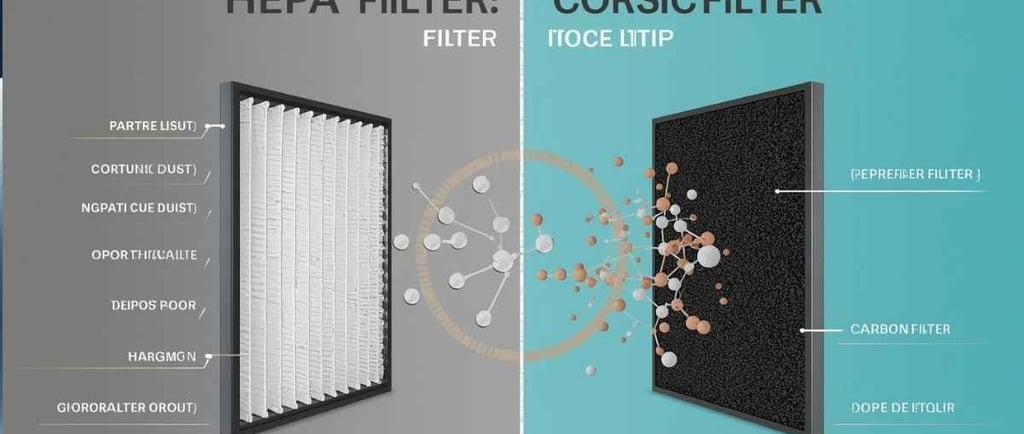
Various technologies are employed in air purifiers, each with its unique strengths and limitations. The most commonly used technologies include HEPA (High-Efficiency Particulate Air) filters and activated carbon filters. HEPA filters are renowned for their efficiency in trapping particulate matter, capturing up to 99.97% of particles as small as 0.3 microns. On the other hand, carbon filters excel in absorbing odors and gases but may be less effective at filtering fine particles.
As air quality continues to decline, the importance of air purifiers in households and commercial spaces becomes more evident. By understanding the different technologies and their applications, consumers in Bangladesh can make informed choices about the best air purifying solutions tailored to their specific air quality challenges. This overview sets the stage for a deeper exploration of HEPA and carbon air purifiers and their relative benefits in the context of Bangladesh's air quality issues.
Understanding Air Purifier Technologies
Air purifiers play a crucial role in maintaining indoor air quality, especially in regions such as Bangladesh where pollution levels can be significant. Among the various technologies available, HEPA (High-Efficiency Particulate Air) filters stand out for their proficiency in capturing small particles such as dust, pollen, and pet dander. HEPA filters can trap at least 99.97% of particles that are 0.3 microns in size, making them highly effective for those suffering from allergies or respiratory issues.
Activated carbon filters, another popular technology, work through adsorption, a process where pollutants adhere to the surface of the carbon material. These filters are particularly effective in eliminating volatile organic compounds (VOCs), odors, and some chemical pollutants, thereby enhancing the overall air quality. Combining both HEPA and activated carbon filters can yield significant benefits, providing comprehensive protection against both particulate and gaseous pollutants.
UV light purifiers introduce another dimension to air purification. They use ultraviolet light to kill or inactivate microorganisms such as bacteria, viruses, and mold spores that may be present in the air. While they do not remove particles, they can significantly reduce biological contaminants, ensuring a safer indoor environment.
Ionizers, or ionic air purifiers, function by releasing charged ions into the air, which attach to airborne particles, thereby causing them to clump together and fall out of the breathable space. Although effective, ionizers can sometimes produce ozone as a byproduct, which may be a concern in badly ventilated spaces.
Each air purification technology has its strengths and limitations, making it essential for consumers to consider their specific needs and the types of pollutants prevalent in their environment when choosing the right air purifier. Evaluating air quality parameters in Bangladesh can help guide this important decision.
HEPA Filters: Advantages and Limitations
HEPA filters, an acronym for High Efficiency Particulate Air filters, are designed to trap a significant percentage of particles in the air. To qualify as a true HEPA filter, it must capture at least 99.97% of particles that are 0.3 microns in diameter. This effectiveness makes HEPA filters particularly beneficial for people suffering from allergies or respiratory issues, as they can efficiently trap allergens like dust mites, pollen, pet dander, and other common particulate matter. In countries like Bangladesh, where air quality can be compromised due to dust, emissions, and other pollutants, installing HEPA filters can markedly improve indoor air conditions.
One of the key advantages of HEPA filters lies in their mechanical filtration process. Unlike other air cleaning technologies that rely on chemical processes, HEPA filters capture particulates through a tangle of fibers. This design not only provides high filtration efficiency but also ensures that the clean air released back into the environment is free from harmful particles. Furthermore, HEPA filters require minimal maintenance, typically needing replacement once or twice a year, depending on usage and air quality.
Despite their numerous benefits, HEPA filters do have certain limitations. Primarily, they are ineffective against gaseous pollutants, odors, and volatile organic compounds (VOCs), which are significant concerns in urban areas. These filters are not designed to remove smoke or unpleasant smells, meaning that additional filtration technologies, such as activated carbon, may be required to achieve a comprehensive air quality solution. Moreover, HEPA filters can experience a drop in efficiency if they become clogged with dust and debris, necessitating regular checks and maintenance to ensure optimal air purification.
Activated Carbon Filters: How They Work
Activated carbon filters play a vital role in air purification by employing a scientifically advanced mechanism known as adsorption. These filters are composed of carbon that has been processed to create a vast network of microscopic pores, thereby significantly increasing their surface area. When air passes through the activated carbon, various gaseous pollutants, including odors, volatile organic compounds (VOCs), and other harmful chemicals adhere to the carbon's surface. This property makes activated carbon filters particularly effective in environments where organic compounds and smells are prevalent.
One of the primary advantages of using activated carbon filters is their efficiency in reducing unpleasant odors, which is especially critical in urban areas like Bangladesh where pollution levels can be high. Additionally, these filters are adept at capturing VOCs, which can emanate from common household items such as paints, cleaning agents, and furniture. The ability of activated carbon to trap these gases makes indoor air quality significantly better.
However, while activated carbon filters excel at targeting gaseous pollutants, they do have certain limitations. They are not designed to remove particulate matter such as dust, pollen, or pet dander, which are effectively trapped by HEPA filters. Furthermore, the efficiency of carbon filters diminishes over time as they become saturated with pollutants. It is crucial to replace them according to manufacturer guidelines to ensure optimal performance.
In conclusion, activated carbon filters are an essential component of air purifiers, especially in regions adversely affected by air quality issues. Their ability to adsorb a variety of VOCs and odors provides a significant benefit to users. However, for comprehensive air purification, especially in the removal of particulates, it is advisable to consider models that incorporate both activated carbon and HEPA filters. This combination can vastly improve indoor air quality, catering to diverse air purification needs.
Comparing HEPA and Activated Carbon Filters
When examining air purification technologies, the two most prominent types are HEPA (High-Efficiency Particulate Air) filters and activated carbon filters. Each of these systems possesses unique strengths and weaknesses, particularly relevant to the air quality concerns prevalent in Bangladesh, where issues like dust, smoke, and unwanted odors are widespread.
HEPA filters are highly effective at capturing airborne particles. To qualify as a HEPA filter, it must trap at least 99.97% of particles that are 0.3 microns in size. This makes HEPA technology particularly beneficial in environments plagued by dust, pollen, and other particulate matter. In urban areas of Bangladesh, where vehicular emissions and construction dust contribute to poor air quality, a HEPA air purifier can significantly reduce the inhalation of harmful particulate pollutants.
On the other hand, activated carbon filters excel in removing gases and odors due to their porous nature. These filters work by adsorption, effectively trapping volatile organic compounds (VOCs), smoke, and unpleasant smells. In regions of Bangladesh where cooking odors and smoke from biomass fuels are common, activated carbon can be particularly advantageous. However, it is important to note that while activated carbon filters are efficient for odors, they do not capture fines particulate matter effectively.
Ultimately, the choice between a HEPA and an activated carbon filter depends on the specific air quality issues present in one's environment. For comprehensive air purification, many air purifier models combine these technologies, harnessing the strengths of both HEPA and activated carbon filters. This integration allows for the effective removal of particulate matter alongside gases and odors, catering to the complex air quality challenges faced in Bangladesh.
Determining the Optimal Air Purifier Technology for Bangladesh
In the context of Bangladesh's air quality challenges, it is crucial to evaluate the most effective air purification technologies available. The country's air pollution primarily stems from industrial emissions, vehicle exhaust, and other urban activities, leading to significant health risks for its population. Given these circumstances, the choice between HEPA and carbon air purifiers, or a combination of both, becomes essential.
HEPA (High-Efficiency Particulate Air) filters are particularly advantageous as they capture up to 99.97% of particles as small as 0.3 microns. This includes harmful components such as dust, pollen, and even some bacteria and viruses. For cities in Bangladesh suffering from high particulate matter (PM2.5 and PM10) levels, a HEPA purifier can serve as a vital defense against these pollutants. Moreover, maintenance costs for HEPA filters tend to be manageable since they generally require replacement every 6 to 12 months, depending on the air quality and usage.
On the other hand, carbon air purifiers excel in removing volatile organic compounds (VOCs) and odors that may not be effectively addressed by HEPA filters. In urban areas of Bangladesh, where vehicle emissions contribute to a cocktail of pungent smells and harmful gases, carbon filters can complement the HEPA technology to create a more comprehensive air purification solution. While carbon filters have a shorter lifespan, typically requiring replacement every 3 to 6 months, their ability to improve indoor air quality makes them valuable.
In light of these considerations, a dual approach that combines HEPA and carbon technologies is recommended for optimal air purification in Bangladesh. This integrated strategy addresses both particulate pollution and gaseous contaminants, ensuring a cleaner and healthier living environment for residents.
Conclusion and Final Recommendations
In light of the discussions presented throughout this article, the selection of an air purifier tailored to the specific air quality challenges faced in Bangladesh emerges as a crucial decision for consumers. Both HEPA and carbon air purifiers serve distinct functions that, when understood, can significantly improve indoor air quality. HEPA filters are notably effective in capturing particulate matter, including dust, pollen, and fine particles that pose health risks. This makes them particularly suited for environments with high levels of airborne pollutants.
On the other hand, carbon air purifiers excel in addressing odors and harmful gases, which are often prevalent in urban areas of Bangladesh. Their ability to adsorb volatile organic compounds (VOCs) and other gaseous substances highlights their importance in improving air quality, especially in spaces where cooking and industrial emissions contribute to pollution.
Consumers are encouraged to assess their individual needs based on their living environments. If the primary concern is the presence of particulate matter, investing in a HEPA air purifier would be prudent. Conversely, if odors and chemical pollutants are more pressing, a carbon air purifier would offer significant benefits.
Ultimately, the best choice may not be confined to one technology alone. Many modern air purifiers combine HEPA and carbon filters, providing a comprehensive solution to tackle both particulate matter and gases. Such hybrid models may be particularly advantageous in the context of Bangladesh, where varying pollution sources necessitate a versatile approach.
In summary, selecting the right air purifier technology hinges upon a clear understanding of air quality issues and individual needs. By making informed decisions, consumers can significantly enhance their indoor air quality, leading to improved health outcomes and overall well-being.
Address:
264/5, Kamal Soroni Road, Mirpur, Dhaka-1216
Contact
Your Quaries on pest control askings
pestexterminatorbd@gmail.com
+8801642008383 +8801988300003, 01723057746
© 2025. All rights reserved. to Urban Pest Control Pvt. Ltd. this site is powered by Our Own IT Team