
Full Face vs Half Face Respirator: Which One is Better?
3/30/20268 min read
Understanding Respirator Types
Respirators are personal protective equipment designed to protect individuals from inhaling hazardous substances, including airborne contaminants, gases, and toxic fumes. These devices play a vital role across various industries, including construction, healthcare, and manufacturing, ensuring that workers maintain a safe breathing environment. The primary function of a respirator is to filter out harmful particles or provide a clean air supply, effectively shielding the respiratory system from potential health risks.
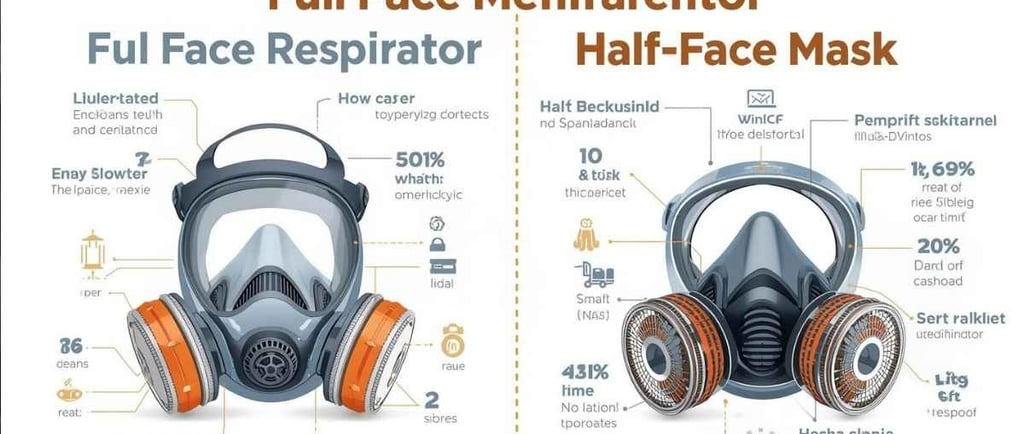
Respirators are generally categorized into two main types: full face and half face respirators. Full face respirators cover the entire face and provide an added layer of protection by sealing tightly around the eyes, nose, and mouth. This design not only protects against airborne hazards but also shields against splashes and irritants that might come into contact with the face. These respirators are particularly beneficial in environments with high exposure to toxic chemicals or in situations where visibility is essential, as they often include a visor.
On the other hand, half face respirators cover only the lower part of the face, protecting the nose and mouth. While they are effective in filtering airborne particles, they do not provide eye protection. Half face respirators are commonly used in less hazardous environments where the risks are lower, making them a popular choice for tasks such as painting, woodworking, and certain types of cleaning.
The importance of respiratory protection cannot be overstated, especially in industries where workers are exposed to harmful substances. Compliance with occupational safety regulations often necessitates the use of these devices to safeguard workers' health. Moreover, understanding the correct application and usage of either type of respirator is critical, as it ensures that individuals are adequately protected against specific hazards they may encounter in the workplace.
Pros and Cons of Full Face Respirators
Full face respirators offer several advantages that make them an essential choice for those working in environments with hazardous conditions. One of the most significant benefits is comprehensive facial protection. Unlike half face masks, which only cover the nose and mouth, full face respirators protect the entire face, including the eyes. This complete coverage is crucial when working with chemical sprays, vapors, or particulates, as it shields against exposure to harmful substances that may irritate or injure the eyes.
Another advantage is the wider field of vision that full face respirators provide. Many models are designed with high-quality lenses that offer clarity and minimal distortion, enhancing the user’s awareness of their surroundings. This feature is particularly beneficial in industrial settings where situational awareness can be imperative for safety.
Moreover, full face respirators are especially suitable in environments that contain hazardous gases or vapors, as they often come equipped with specific filters that enhance protection against these contaminants. Their design allows for effective sealing against the skin, which minimizes the potential for inhalation of harmful air particles.
However, full face respirators also present several disadvantages that should be considered. Comfort issues can arise during extended wear, as the masks may feel heavy or cumbersome. The fit is crucial; therefore, it is recommended that users conduct regular fit tests to ensure effectiveness. Additionally, fogging of the lenses can be a significant drawback, especially in humid or temperature-variable environments. This fogging can obstruct vision and may require the use of anti-fogging agents.
Finally, the cost of full face respirators typically exceeds that of half-face models, making them a more considerable investment. While they offer enhanced protection and features, one must weigh these benefits against the potential drawbacks to make an informed choice.
Pros and Cons of Half Face Respirators
Half face respirators are a popular choice among those seeking respiratory protection in various environments, particularly due to their lightweight design and relative affordability. These masks provide sufficient coverage for the mouth and nose, offering an effective barrier against airborne particles and contaminants without the weight of a full facepiece. Their lighter weight makes half face respirators easier to wear for extended periods, enhancing user comfort and compliance, especially in less hazardous environments.
Another significant advantage of half face respirators is their generally lower cost compared to full face options. This affordability makes them an appealing choice for both individuals and organizations that require respiratory protection on a budget. Moreover, the ease of use makes them accessible for quick applications, allowing users to don and doff the masks efficiently without extensive training.
However, there are notable disadvantages to consider when opting for half face respirators. One primary concern is the exposure of the eyes to potential hazards, as these masks do not offer any eye protection. In scenarios involving toxic vapors, irritants, or flying debris, this lack of eye coverage could pose a significant risk to the wearer. Additionally, half face respirators are typically less suited for high-risk environments, where full face solutions may be necessary to ensure comprehensive protection against harmful substances. Furthermore, achieving an adequate fit can be challenging; if not properly sized or adjusted, the mask may leak, significantly reducing its overall efficacy.
Ultimately, while half face respirators present several advantages including lightweight design, lower costs, and ease of use, it is essential to weigh these benefits against the potential risks associated with eye exposure and the mask's fit in demanding situations.
Price Comparison of Respirators
Understanding the price dynamics of full face and half face respirators is crucial for informed decision-making when selecting the appropriate respiratory protection. The prices of respirators can vary widely, influenced by multiple factors such as brand reputation, specific features, and adherence to certification standards.
On average, the price for half face respirators typically ranges from $15 to $50. These masks are generally more cost-effective, as they cover only the mouth and nose, making them accessible for individuals or organizations with limited budgets. However, features such as adjustable straps, filters, and comfort settings can raise the price considerably. For example, a half face respirator with advanced filtration technology may cost upwards of $75.
In contrast, full face respirators tend to have a higher price point, generally ranging from $50 to $300 or more. This price difference can be attributed to their comprehensive design, which provides protection for the eyes and face in addition to the respiratory system. The inclusion of premium materials, multiple lens options, and extensive safety certifications often contributes to the escalated costs. Top brands that cater to the industrial sector or hazardous environment applications can command even higher prices, reflecting their reliability and effectiveness.
It is vital to consider additional costs involved in maintaining these respirators, such as the price of replacement filters, which vary for both types. While full face masks might require more expensive filters due to their complexity, half face masks generally have lower associated costs for parts and maintenance.
By evaluating these pricing factors, individuals and organizations can make a sound investment in respiratory protection that meets their specific needs without compromising safety.
Usage Scenarios: When to Use Which Respirator
Choosing the right type of respirator is crucial in ensuring adequate protection against airborne contaminants. Different situations and work environments necessitate specific types of respiratory protection. Understanding the particular applications of full face and half face respirators can help in making an informed decision.
For construction sites, where dust, fumes, and particulate matter are prevalent, a half face respirator is often sufficient. It offers a comfortable fit and allows for easy communication among workers. However, in scenarios where there is exposure to hazardous chemicals or irritants, such as in demolition or asbestos removal, a full face respirator is recommended. This type provides enhanced protection to both the respiratory system and the eyes, which are vulnerable to irritants.
In manufacturing environments, the decision hinges on the specific hazards present. For instance, those working with solvents or chemicals might find that a full face respirator is more appropriate due to potential splashes and high levels of toxic vapors. Conversely, workers in less hazardous settings may opt for half face respirators that are lightweight and less cumbersome.
Emergency response situations require rapid assessment; thus, responders typically prefer full face respirators to ensure maximum protection from unknown airborne contaminants. The comprehensive coverage of the face shields responders from chemical agents effectively.
In healthcare settings, the type of respirator used can vary greatly. During routine procedures, practitioners may use half face respirators, particularly when there is a moderate risk of airborne diseases. However, during outbreaks or procedures that generate aerosols, full face respirators, often equipped with powered air-purifying respirators (PAPRs), might be necessary to provide optimal protection against infectious agents.
In summary, determining which respirator to use depends on the specific scenario and the type of exposure involved. By assessing the risks present in each environment, individuals can select the respirator that best fits their needs, ensuring safety and compliance with health regulations.
Industry-Specific Recommendations
When selecting the appropriate type of respirator for various industries, it is crucial to consider the specific exposure risks, the type of contaminants present, and the regulatory compliance requirements of each field. The choice between full face and half face respirators can significantly impact workplace safety and health outcomes.
In the construction industry, workers are often exposed to a variety of airborne dust, particulates, and sometimes harmful gases. For this environment, a half face respirator may suffice for most applications, especially when working with non-toxic dust. However, during activities that involve harmful substances like silica or asbestos, a full face respirator is recommended for added protection, as it seals around the entire face, providing a higher level of filtration and safeguarding the eyes.
In painting and coating, the scenario shifts slightly; the presence of volatile organic compounds (VOCs) necessitates a more robust protective measure. Here, a full face respirator is generally preferable, offering comprehensive coverage against both inhalation risks and eye irritation. Additionally, these respirators can be equipped with specific filters designed to protect against organic vapors.
The healthcare sector presents unique challenges, especially during infectious disease outbreaks. Healthcare professionals are often exposed to airborne pathogens, necessitating the highest levels of protection. As such, full face respirators with fitted N95 or higher filters are widely recommended, as they protect against both inhalation of microorganisms and create a physical barrier against contamination.
Lastly, in industrial cleaning settings, workers encounter various chemical disinfectants and hazardous materials. Depending on the concentration and type of chemicals used, a half face respirator may be sufficient for low-level exposure. However, when dealing with particularly toxic substances, a full face respirator becomes essential to ensure comprehensive protection for the respiratory system and facial skin.
Safety Standards and Guidelines for Respirator Use
The use of respirators, whether full face or half face, is governed by a variety of safety standards and guidelines to ensure the utmost protection for users. Organizations such as the Occupational Safety and Health Administration (OSHA) and the National Institute for Occupational Safety and Health (NIOSH) provide crucial regulations that outline the requirements for respirator selection, use, and maintenance. Compliance with these standards is pivotal for ensuring that the respirators perform effectively under various working conditions.
One of the key areas covered by these safety standards is the proper fit of the respirator. A well-fitted respirator provides a reliable seal that prevents contaminants from entering the respiratory system. Therefore, organizations are encouraged to conduct fit testing, a process that assesses whether a respirator fits the user correctly and comfortably. This testing should be repeated whenever there are significant changes in the wearer’s facial structure, such as weight loss or dental changes. The importance of a proper fit cannot be overstated, as even a small gap can significantly compromise respiratory protection.
Regular maintenance of respirators is another critical factor addressed by safety guidelines. It is essential to inspect respirators before each use for any signs of damage or degradation. Routine cleaning and disinfecting are also necessary to ensure effective functionality and hygiene. Furthermore, users should receive thorough training on how to properly wear, maintain, and store their respirators to maximize safety and performance. Training programs must not only cover equipment-related topics but also provide insight into the environment and conditions that necessitate respirator use.
In conclusion, adhering to established safety standards and guidelines for respirator use is fundamental for safeguarding the health of individuals in various work environments. By ensuring proper fitting, maintenance, and training, organizations can enhance the effectiveness of their respiratory protection programs, thereby minimizing the risk of respiratory hazards.
Address:
264/5, Kamal Soroni Road, Mirpur, Dhaka-1216
Contact
Your Quaries on pest control askings
pestexterminatorbd@gmail.com
+8801642008383 +8801988300003, 01723057746
© 2025. All rights reserved. to Urban Pest Control Pvt. Ltd. this site is powered by Our Own IT Team