
Do Ultrasonic Pest Repellers Really Work? Scientific Explanation
3/12/20267 min read
Introduction to Ultrasonic Pest Repellers
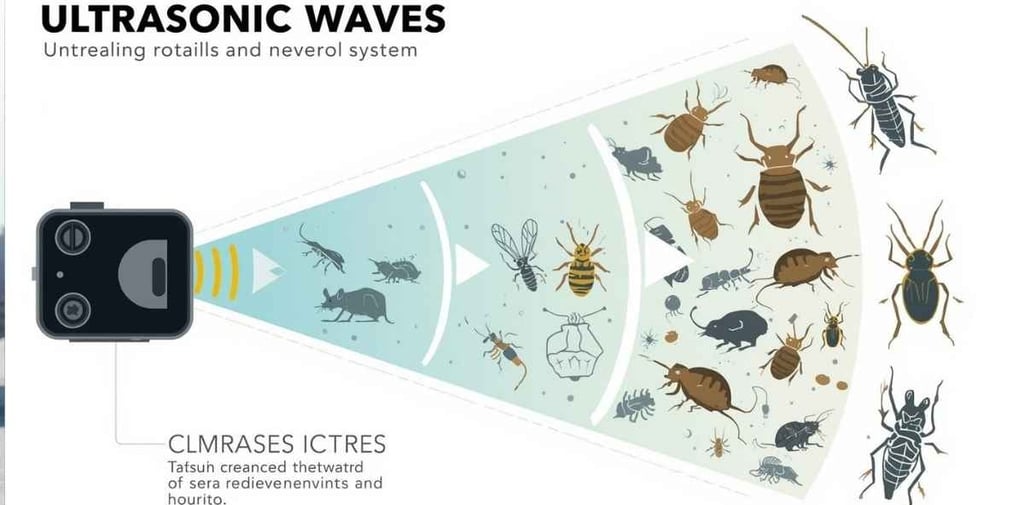
Ultrasonic pest repellers are devices that emit high-frequency sound waves, beyond the audible range for humans, with the aim of repelling various pests, including rodents and insects. These devices are becoming increasingly popular as an alternative to traditional pest control methods, such as lethal traps and chemical pesticides. The interest in ultrasonic repellers reflects a broader trend towards seeking environmentally friendly and non-toxic solutions to pest problems, particularly in residential settings.
The underlying principle of ultrasonic pest repellers is based on the assumption that the emitted sound waves disrupt the communication and navigation abilities of the pests, making the environment less hospitable to them. As a result, these devices are often marketed as safe for use around children and pets, aligning with the public's growing preference for humane pest control options. However, the scientific community remains divided on their actual effectiveness. Numerous studies have been conducted to determine whether these devices genuinely deliver on their promise of pest deterrence, leading to varied results.
With the rise of urban living and the need for pest management solutions, many homeowners are turning to ultrasonic pest repellers in hopes of finding a simple and effective way to tackle pest issues without resorting to harsh chemicals. As consumers become more aware of their pest control options, understanding the science behind these ultrasonic devices and their effectiveness becomes essential. This blog post will explore the claims and realities surrounding ultrasonic pest repellers, analyzing the evidence and expert opinions to provide insight into whether these devices truly work.
The Science of Ultrasonic Sound Waves
Ultrasonic sound waves are defined as sound waves that have frequencies above the audible range for humans, generally exceeding 20 kHz. In contrast, normal sound waves fall within the frequency range of 20 Hz to 20 kHz, which is easily detectable by the human ear. The primary distinction between these two types of sound lies not only in their frequency but also in their acoustic properties, which influence how they propagate through different environments.
Ultrasonic sound waves behave differently compared to sounds that we can hear. Due to their high frequency, they exhibit shorter wavelengths, allowing them to travel with less distortion and exhibit unique interactions with various materials. When ultrasonic waves encounter biological organisms, such as pests, they can interfere with the normal functioning of their auditory systems, making it difficult for them to navigate, communicate, and locate food sources. This reaction is particularly pronounced in certain species, including rodents and insects, whose physiological structures are more sensitive to these high-frequency sounds.
Scientists have investigated the impact of ultrasonic waves on pest behavior through various studies. These studies suggest that while ultrasonic pest repellers might not kill the pests directly, they induce stress or disorientation, prompting pests to leave the treated areas. The effectiveness of these devices, however, may vary based on several factors such as the frequency used, the pest species, and the environment in which they are deployed.
Furthermore, the effectiveness of ultrasonic pest control methods is still under scientific scrutiny, as recent research shows mixed results regarding their long-term efficacy. Consequently, consumers should approach ultrasonic repellers with a balanced perspective, considering both the biological premise behind their operation and the existing empirical evidence surrounding their effectiveness.
How Ultrasonic Waves Disturb Pest Behavior
Ultrasonic pest repellers are designed to emit sound waves at frequencies above the range of human hearing, typically between 20 kHz and 65 kHz. These sound waves target the auditory systems of various pests, including rodents and insects, eliciting significant behavioral changes. Scientists have found that these high-frequency sounds can disrupt the normal behavior of these pests, leading to alterations in their patterns of activity and even their reproductive functions.
For rodents, ultrasonic frequencies can induce stress and discomfort, prompting them to flee from environments where these sounds are prevalent. Research indicates that exposure to ultrasonic waves can interfere with the rodents' communication signals, which are crucial for their social interactions and mating behaviors. The heightened anxiety and confusion caused by ultrasound exposure make these areas less attractive to them, thereby serving as a deterrent for pest control.
Similarly, insects like cockroaches and flies are also affected by ultrasonic sound waves. Studies suggest that exposure to certain frequencies can impair their navigation abilities. This disruption can hinder their search for food and mates while also affecting their overall survival strategies. The sounds may mimic natural predators, causing pests to alter their movements significantly. Insects may exhibit erratic behavior or abandon an area altogether when subjected to ultrasonic frequencies, which can effectively reduce their populations in enclosed spaces.
Overall, the science behind ultrasonic pest repellers rests on their ability to create an uncomfortable auditory environment for unwanted pests. Their effectiveness may vary based on the species and the frequency used. However, the behavioral modifications observed in pests provide a compelling argument for incorporating ultrasonic technology into pest management strategies.
Research Findings on Ultrasonic Pest Repellers
Numerous scientific studies have been conducted to evaluate the effectiveness of ultrasonic pest repellers, which are devices designed to emit high-frequency sound waves that are intended to deter rodents and other pests. One notable research effort involved examining the response of rodents to various ultrasonic frequencies. The study found that while some rodents displayed initial agitation when exposed to these sounds, there was little evidence to support sustained deterrence over time.
In another experiment focused on household pests, researchers monitored the activity levels of insects in environments where ultrasonic devices were employed. Surprisingly, the results indicated no significant reduction in insect populations or their near-total disappearance. Instead, small variations in activity could not conclusively attribute any positive changes to the use of ultrasonic technology. A peer-reviewed article suggested that various factors, including the specific frequency emitted and the type of pest, can heavily influence outcomes.
Furthermore, a comprehensive review of existing literature highlighted the lack of standardization in testing methods across studies, which often led to conflicting results. Some researchers noted that while ultrasonic repellers may have some short-term impact, the prolonged exposure tends to diminish their effectiveness as pests become desensitized to the sound. This behavior indicates a potential need for a combination of pest management strategies rather than reliance on ultrasonic devices alone.
Overall, the efficacy of ultrasonic pest repellers remains a contentious topic within the scientific community. While some studies claim limited success, substantial evidence is still required to confirm their long-term effectiveness or to consider them a reliable pest control solution in real-world applications.
Limitations and Realistic Expectations of Ultrasonic Repellers
Ultrasonic pest repellers are frequently marketed as an effective solution to keep unwanted pests at bay. However, it is essential to understand their limitations to manage expectations accurately. One critical factor influencing the effectiveness of these devices is the size of the room in which they are placed. Ultrasonic waves typically have difficulty penetrating solid objects and may not travel effectively through walls or furniture, resulting in only a limited range of protection. For larger spaces, multiple devices may be needed for optimal coverage.
Moreover, the species of pests being targeted can greatly affect the success rate of ultrasonic repellers. While some common pests like rodents and insects are thought to be deterred by the high-frequency sounds these devices emit, there is inconsistency in their response. Some studies indicate that certain species may not react at all or may even become habituated to the sound over time, negating any initial effectiveness.
The frequency range of the ultrasonic waves produced is another crucial aspect. Different devices emit various frequencies, which may or may not correspond effectively to the auditory range of the specific pest species. This variance can lead to disparities in the results observed by users. Additionally, environmental factors such as background noise and the presence of other electromagnetic signals can further interfere with these devices' operational effectiveness.
Given these limitations, it is advisable to consider ultrasonic pest repellers as one component of a broader pest management strategy rather than a standalone solution. Users should be prepared to complement their use with traditional pest control measures for comprehensive management. By acknowledging the constraints of ultrasonic repellers, consumers can form a more realistic expectation about their capabilities and limitations in pest control.
Comparing Ultrasonic Pest Repellers with Other Pest Control Methods
When evaluating pest control methods, it is essential to compare ultrasonic pest repellers with traditional approaches such as traps and poisons, as well as other electronic solutions. Each method has its own unique advantages and drawbacks, impacting their effectiveness and suitability for different situations.
Ultrasonic pest repellers operate by emitting sound waves at frequencies that are inaudible to humans but disturbing to pests. This can deter rodents and insects from invading an area. A significant advantage of these devices is their environmentally friendly nature, as they do not rely on toxic chemicals. Additionally, ultrasonic pest repellers are simple to use, requiring minimal maintenance and no need for baits that need to be regularly replaced.
In contrast, traditional methods such as traps and poisons offer a more direct approach to pest management. Traps can capture or kill pests quickly, providing immediate results. However, traps may require regular monitoring and disposal, and they may not be effective for all types of pests. Moreover, the use of poisons poses health risks to humans and pets, necessitating careful handling and application.
Another technology-driven option includes electronic traps and pesticides, which often integrate smart technology for enhanced control over pest populations. These devices can offer real-time monitoring and analysis, allowing homeowners to understand pest activity better. Nonetheless, these solutions may carry a higher initial cost compared to ultrasonic devices.
Ultimately, the choice among these pest control methods depends on several factors, such as the severity of the pest problem, environmental considerations, and personal preferences. Integrating multiple approaches, including ultrasonic pest repellers, may yield the best results, providing a balanced strategy to effectively manage pests while minimizing risks and disruptions.
Conclusion and Final Thoughts
In evaluating the effectiveness of ultrasonic pest repellers, it is essential to consider the scientific evidence that supports their use as a pest control method. The mechanisms by which these devices operate are situated within the realm of sound waves; however, studies have presented a mixed bag of results regarding their actual efficacy. Some users report positive outcomes, claiming a notable decline in pest activity, while various scientific research efforts indicate that their effectiveness may not be as robust or consistent as advertised.
Moreover, the limitations of ultrasonic technology must be acknowledged. Various factors, such as the environment in which these devices are employed, the type of pest, and the frequency of the ultrasonic waves, can significantly influence their performance. It is paramount for consumers to understand that while ultrasonic pest repellers may serve as an additional strategy in integrated pest management, they should not be depended upon as the sole solution for pest problems.
As you contemplate whether to invest in an ultrasonic pest repeller, it is advisable to weigh the information presented in this discussion carefully. Recognizing both the potential benefits and the limitations of ultrasonic technology will enable you to make an informed decision. Complementing these devices with other proven pest control methods may yield more favorable results. Ultimately, it is crucial to adopt a holistic approach to pest control, one that encompasses multiple strategies tailored to your specific situation.
Address:
264/5, Kamal Soroni Road, Mirpur, Dhaka-1216
Contact
Your Quaries on pest control askings
pestexterminatorbd@gmail.com
+8801642008383 +8801988300003, 01723057746
© 2025. All rights reserved. to Urban Pest Control Pvt. Ltd. this site is powered by Our Own IT Team