
Best Pest Control Services in New York: Complete Guide to a Pest-Free Home
3/11/20266 min read

Common Pests in New York
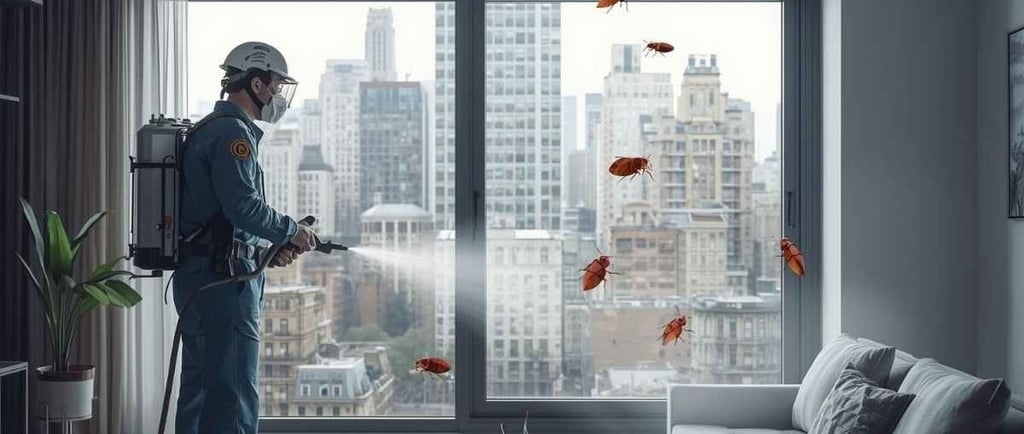
New York City, with its dense population and varied architecture, provides an ideal habitat for numerous pests. Among the most prevalent pests are bed bugs, cockroaches, mice, rats, and termites. Each of these pests possesses unique behavioral patterns and environmental preferences that contribute to their proliferation within both residential and commercial spaces.
Bed bugs, small and wingless, thrive in warm environments. They are notorious for infesting mattresses and bedding, making hotels and apartment complexes prime targets. New Yorkers often face challenges with these pests, particularly in densely populated settings where frequent transient populations create opportunities for bed bug transmission.
Cockroaches, particularly the German and American varieties, are another significant issue in New York. These nocturnal insects prefer dark, damp areas such as kitchens and basements. Their reproductive capabilities allow them to multiply quickly, creating colonies that can infest entire buildings if not promptly addressed.
Mice and rats are common rodents in urban areas, attracted by the availability of food and shelter. Mice tend to nest within walls and attics, while rats are often found in sewers and basements. Their physiological adaptability to various environments enables them to thrive year-round, though their activity tends to increase during the colder months as they seek warmth and sustenance.
Termites, although less visible than other pests, pose a serious threat to the structural integrity of buildings. These wood-destroying insects are attracted to damp and decaying wood, making both older and newly constructed buildings vulnerable to their activities. Their destructive nature necessitates regular inspections to prevent extensive damage.
In summary, New York's unique urban landscape fosters a range of pest issues that require vigilance and effective management strategies to prevent infestations in both homes and businesses.
Understanding Bed Bug Infestation
Bed bugs, scientifically known as Cimex lectularius, are small, nocturnal insects that primarily feed on human blood. Their presence is increasingly becoming a concern in urban areas such as New York. The initial sign of a bed bug infestation usually manifests as small, itchy bites on the skin, often arranged in a line or cluster. However, the most telling sign of an infestation is the discovery of live bed bugs or their shed skins in bedding, furniture seams, or baseboards. In addition to physical discomfort, bed bugs contribute to psychological stress, making their presence particularly troublesome.
Risks and Challenges of Infestation
Bed bug infestations pose multiple risks, including the potential for secondary infections from scratching bites and significant emotional distress. Their ability to reproduce quickly exacerbates the problem; a single female bed bug can lay hundreds of eggs in her lifetime. Furthermore, bed bugs are notoriously resilient to many over-the-counter pesticides, often requiring professional intervention for successful eradication.
Effective Treatment Options
Addressing a bed bug issue typically involves a combination of strategies. Heat treatment is one effective method, as bed bugs cannot survive high temperatures, making this a particularly efficient way to eliminate them from an infested area. Chemical controls are another option, involving the application of specially formulated insecticides designed to target bed bugs. However, these chemicals must be used with caution due to potential health risks and the necessity of repeated applications to eliminate all life stages of the pest.
Importance of Inspections and Professional Help
A thorough inspection is crucial for identifying the extent of an infestation and determining the most effective treatment plan. Residents should check their beds, clothing, and furnishings regularly, especially after travel, as bed bugs can easily hitch a ride. In cases of severe infestation or persistent problems, hiring a pest control professional is advisable. They possess the expertise and equipment to effectively address bed bug infestations, ensuring that the problem is resolved comprehensively. Additionally, preventative measures, such as encasements for mattresses and proactive monitoring, can help residents maintain a bug-free environment.
Rodent Control Strategies
In urban settings, rodent populations can proliferate rapidly, making effective rodent control strategies crucial for maintaining public health and safety. A comprehensive approach involves both preventive measures and active control methods.
One of the most effective preventive strategies is sealing entry points. Rodents can squeeze through very small openings, so it is vital to inspect buildings for cracks and gaps around doors, windows, and foundations. Using caulk or metal mesh to seal these areas can significantly reduce the likelihood of rodents entering a property. Additionally, maintaining cleanliness is essential; regular cleaning to remove food waste, clutter, and debris limits the resources available for rodents to thrive.
Traps are a commonly employed method for directly managing rodent populations. Snap traps are favored for their efficiency and quick action, while sticky traps can capture rodents without the risk of escape. Placement is vital—traps should be positioned along walls where rodents frequently travel. Meanwhile, baiting methods, such as the use of bait stations, can lure rodents with attractive food sources while ensuring safety for non-target animals.
Rodenticides are another option, but their use must be approached with caution. There are various types of rodenticides, including anticoagulants and bromethalin, each with different modes of action. While they can be effective in reducing rodent populations, environmental impact and the risk of secondary poisoning to other wildlife should always be considered.
Lastly, sanitation plays a significant role in rodent management. Ensuring that trash is securely stored, food is not left exposed, and surrounding landscaping is well-maintained can create an inhospitable environment for rodents. These integrated methods—combining preventive measures, trapping, rodenticides, and sanitation—form a holistic strategy for effective rodent control in urban settings.
Professional Extermination Methods
Professional pest control techniques are essential in managing pest problems effectively. Among the prevalent methods are chemical treatments, integrated pest management (IPM), and eco-friendly alternatives, each offering unique benefits and applications. Chemical treatments involve the use of pesticides meticulously applied by certified professionals to target specific pests while minimizing human exposure. These treatments can be highly effective, particularly in severe infestations.
Integrated pest management is a more holistic approach that combines various control methods. This strategy emphasizes understanding pest biology and behavior to implement prevention, monitoring, and control measures. Professionals trained in IPM focus not only on extermination but also on sustainable practices to reduce future infestations. This could mean making recommendations for habitat modifications, which can significantly affect pest presence in a given area.
Eco-friendly alternatives have gained traction among homeowners seeking to minimize environmental impact while still addressing pest control needs. Professionals in New York are increasingly adopting these methods, utilizing natural pesticides and organic solutions that target pests without harming beneficial insects or the surrounding ecosystem. This approach not only ensures a safer home environment but also aligns with the growing trend towards sustainability.
Choosing licensed and experienced pest control service providers is crucial for implementing these methods effectively. Licensed professionals possess the knowledge and skills to assess the specific pest issue accurately, provide tailored solutions, and ensure compliance with local regulations. Moreover, ongoing pest control maintenance is vital to prevent re-infestation. Regular inspections and treatments can help maintain a pest-free environment, providing peace of mind for homeowners and businesses alike.
Cost of Pest Control in NYC
Understanding the costs associated with pest control services in New York City is essential for homeowners and businesses alike. The pricing for pest control can vary significantly based on multiple factors, including the type of pest, the severity of the infestation, and the methods of extermination chosen. For instance, common pests such as rodents, cockroaches, and bedbugs each demand unique approaches, which can affect overall costs.
In general, one-time treatment for minor pest issues may range from $100 to $300, depending on the extent of the infestation and the treatment required. For more complex or serious infestations, especially involving termites or extensive rodent problems, costs can escalate, often starting from $500 and potentially exceeding $2,000 for comprehensive eradication services.
Preventive measures, which include inspections and regular maintenance, are an important aspect of effective pest management in NYC. Such services can be offered through annual agreements, with costs typically ranging from $300 to $700 per year, depending on the frequency of visits and the specific program chosen. Monthly or bi-monthly services might offer a higher level of assurance for ongoing issues but will accordingly adjust the budget required.
Additionally, methods employed in pest control can influence prices substantially. Chemical treatments, integrated pest management (IPM), and eco-friendly approaches each present differing costs. Chemical solutions may be less expensive initially but could entail higher risks and potential follow-up treatments. On the other hand, IPM and green methods tend to be more holistic but may come at a premium.
Therefore, when considering pest control in NYC, assessing these factors is vital to determine the most suitable and cost-effective solution for your specific pest issue.
Prevention Tips for Homeowners
Effective pest prevention is essential for maintaining a healthy living environment in New York. Homeowners and renters can take simple yet practical steps to minimize the risk of pest infestations. To begin with, maintaining cleanliness is paramount. Regularly cleaning kitchens and dining areas prevents food residue from accumulating, which can attract unwanted pests. This includes wiping down counters, sweeping floors, and promptly managing spills.
Proper food storage is another critical factor in pest prevention. Storing food in airtight containers helps to keep pests at bay, as it eliminates potential food sources. It is advisable to keep pantry shelves organized and to periodically check for expired items. Likewise, pet food should also be stored appropriately to prevent attracting rodents and insects.
Sealing cracks and entry points is an effective way to block pests from entering your home. Homeowners should inspect windows, doors, and the foundation for gaps or holes, sealing them with caulk or appropriate materials. In addition, ensuring that screens are intact and fitting properly can further enhance barriers against pests.
Utilizing pest deterrents can also play a significant role in prevention. Natural deterrents, such as essential oils, can be used to repel insects, while traps and baits can help monitor and manage pest populations. By placing traps in strategic locations, homeowners can identify problems early on and take swift action.
Lastly, incorporating regular inspections and monitoring contributes to a proactive approach to pest management. Homeowners should routinely examine their property for signs of pests and address any issues promptly. This not only preserves the integrity of the home but also creates a safer living environment.
Address:
264/5, Kamal Soroni Road, Mirpur, Dhaka-1216
Contact
Your Quaries on pest control askings
pestexterminatorbd@gmail.com
+8801642008383 +8801988300003, 01723057746
© 2025. All rights reserved. to Urban Pest Control Pvt. Ltd. this site is powered by Our Own IT Team