
Air Quality Index (AQI) Explained: What the Numbers Mean for Your Health
3/8/20267 min read
Understanding the Air Quality Index (AQI)
The Air Quality Index (AQI) is a crucial tool used to communicate the status of air quality to the general public. It serves as a standardized system that simplifies complex air quality data into an understandable format, making it easier for individuals to assess the quality of the air they breathe. The primary purpose of the AQI is to provide information regarding how polluted the air currently is or how polluted it is forecasted to become, allowing people to make informed decisions about their health and activities.
The AQI is calculated based on the concentrations of specific pollutants known to have adverse effects on human health and the environment. Key pollutants measured include ozone (O3), nitrogen dioxide (NO2), sulfur dioxide (SO2), carbon monoxide (CO), and particulate matter (PM10 and PM2.5). Each of these pollutants is monitored and measured at various monitoring stations, providing real-time data on air quality across different regions.
The methodology behind calculating the AQI involves comparing the measured concentrations of these pollutants against established national air quality standards. Each pollutant is assigned a value based on its concentration, and these values are then transformed into a single AQI figure that characterizes overall air quality. This figure is categorized into different ranges, which correspond to varying levels of health concern—from good air quality to hazardous conditions. Individuals can easily interpret the AQI, which is typically displayed on a scale from 0 to 500, where lower values indicate better air quality. By understanding the AQI, people can take necessary precautions to protect their health during periods of poor air quality, particularly those with preexisting health conditions or sensitivities. Thus, the Air Quality Index plays a vital role in public health and environmental awareness.
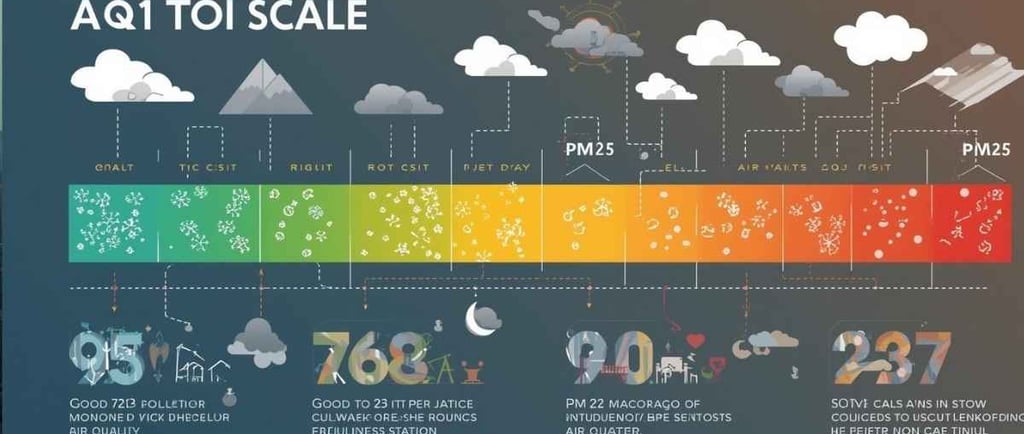
AQI Scale: Good, Moderate, Unhealthy, Hazardous
The Air Quality Index (AQI) is a standardized tool that provides information about the quality of air in a given location. It categorizes air pollution levels into five distinct categories, each indicating the degree to which air quality might impact public health. Understanding these categories is vital for making informed decisions regarding exposure to air pollutants.
The first category is Good, which is represented by an AQI range from 0 to 50. In this range, air quality is considered satisfactory, and air pollution poses little or no risk to the general population. Individuals can engage in outdoor activities without concern.
The next category is Moderate (AQI range 51 to 100). While air quality is acceptable within this range, there may be a concern for some people, particularly those who are unusually sensitive to air pollution. Such individuals may wish to limit prolonged outdoor exertion, but the general public is unlikely to be affected.
In the Unhealthy for Sensitive Groups category (AQI range 101 to 150), members of sensitive groups may experience health effects. The general public is not likely to be affected. It is advised that those who are sensitive to air pollution, such as individuals with respiratory issues or heart problems, reduce prolonged or heavy exertion outdoors.
Moving to the Unhealthy category (AQI range 151 to 200), everyone may begin to experience health effects, with members of sensitive groups experiencing more serious impacts. It is recommended for everyone to limit outdoor activities, particularly strenuous ones.
Finally, the Hazardous category (AQI range 201 and above) indicates that health alert is issued and everyone may experience more serious health effects. It is advisable to remain indoors, and individuals with health conditions should take extra preventive measures.
PM2.5 vs PM10 Explained
Particulate matter (PM) is a significant component of air pollution and is categorized based on the size of the particles. The two primary types of particulate matter that are of particular concern for public health are PM2.5 and PM10. PM2.5 particles are those that are less than 2.5 micrometers in diameter, while PM10 encompasses particles with a diameter of 10 micrometers or less. Despite their small size, these particles can have substantial health effects where they penetrate the respiratory system.
PM2.5 poses a greater health risk due to its ability to penetrate deeper into the lungs and even enter the bloodstream. These ultrafine particles can originate from various sources, including vehicle emissions, industrial discharges, combustion of fossil fuels, and even natural phenomena such as wildfires or volcanic activity. In many urban areas, traffic-related emissions contribute heavily to PM2.5 levels, heightening the risk for respiratory and cardiovascular diseases.
On the other hand, PM10 particles, while larger, are still small enough to enter the lungs. Common sources of PM10 include dust storms, construction activities, and other similar disturbances that generate dust. While PM10 can also cause health issues, it is predominantly associated with effects in the upper respiratory tract. Both PM2.5 and PM10 have been linked to adverse health outcomes, ranging from short-term irritation to severe conditions, including lung cancer and heart disease.
Understanding the differences between PM2.5 and PM10 is crucial in assessing air quality and its potential impacts on human health. Monitoring these particulate matter levels can help inform public health strategies and regulatory measures aimed at reducing air pollution and protecting community health.
Health Risks of High AQI
High Air Quality Index (AQI) levels pose significant health risks, particularly falling into the Unhealthy (151-200) and Hazardous (201 or above) categories. Exposure to poor air quality can result in both immediate and long-term health consequences, affecting various population groups, especially vulnerable individuals such as children, the elderly, and those with preexisting health conditions.
Short-term exposure to high AQI conditions can lead to a range of respiratory issues, including irritation of the airways, coughing, and shortness of breath. For instance, a study conducted during a high pollution event highlighted the increased emergency room visits due to asthma attacks among children. These acute reactions can be alarming, necessitating immediate medical attention and indicating the need for awareness of local air quality levels.
Long-term exposure to elevated AQI levels has more serious implications, contributing to chronic conditions such as cardiovascular diseases and lung cancer. Research has shown that individuals continuously exposed to pollutants associated with high AQI, such as PM2.5 and ozone, may experience reduced lung function and other irreversible health issues. The elderly and individuals suffering from heart disease are particularly at risk, as their bodies already face challenges responding to environmental stressors.
Anecdotal evidence provides further insights into the impact of high AQI levels. For example, a resident in a highly polluted city might recount experiencing persistent headaches and fatigue during periods of high air pollution, pressing the need for community awareness and action. Addressing the health risks associated with the AQI is crucial, as the collective health of communities can be heavily influenced by environmental conditions.
Understanding the health implications of high AQI readings is essential for taking preventive health measures and advocating for cleaner air initiatives.
How Cities Monitor Air Quality
Cities employ a combination of advanced technology and strategic planning to monitor air quality effectively. The primary aim of these efforts is to provide real-time Air Quality Index (AQI) data to the public, enabling informed decisions about health and environmental safety. Government agencies play a crucial role in this monitoring process, often responsible for establishing air quality standards and deploying monitoring stations strategically across urban areas. These stations measure various pollutants, including particulate matter and ozone, thereby contributing to the continuous assessment of air quality.
In addition to ground-based monitoring stations, cities increasingly utilize air quality monitoring networks that leverage satellite data. This technology allows for a broader analysis of air quality over larger geographic areas, providing insights into pollution sources and trends that ground stations alone may not capture. Satellite data complements other methods by filling gaps in coverage and delivering timely information on atmospheric conditions.
Moreover, community-based monitoring efforts have gained traction, granting residents the opportunity to participate in tracking air quality through portable sensors. These initiatives often empower individuals and organizations to contribute local data and raise awareness about air pollution issues in their neighborhoods. Such grassroots efforts can effectively highlight areas of concern that may be overlooked in more traditional monitoring systems.
Consistent and comprehensive air quality monitoring is vital for informing pollution control policies and facilitating effective public health responses. By establishing a robust framework for measuring air pollution, cities are better equipped to develop strategies aimed at improving air quality and safeguarding public health. These strategies might include the implementation of stricter emissions regulations and the promotion of cleaner transportation options, ultimately benefiting the entire urban population.
How People Can Protect Themselves
Air quality can have significant implications for health and well-being. Therefore, it is essential for individuals to take proactive measures to protect themselves from the adverse effects of poor air quality. One of the most straightforward yet effective strategies is to stay indoors during high AQI events. When the Air Quality Index reaches elevated levels, particularly at the 'unhealthy' or 'hazardous' categories, minimizing outdoor exposure can reduce the inhalation of harmful pollutants.
Another method of improving indoor air quality is through the use of air purifiers. These devices are designed to filter out particulate matter and other pollutants from the air, providing cleaner and healthier air for those inside a home or office. When selecting an air purifier, it is advisable to choose models equipped with HEPA filters, known for their effectiveness in trapping fine particles.
Wearing masks while outdoors can also provide a protective barrier against pollution. Masks labeled as N95 or higher are particularly effective in filtering airborne particles and are recommended during poor air quality conditions. Furthermore, individuals should regularly check air quality reports to stay informed about local conditions and adjust their daily activities accordingly. Awareness of AQI levels can guide decisions about outdoor activities, such as exercising or commuting.
Community engagement is vital for broader advocacy for cleaner air initiatives. Individuals can participate in local campaigns aimed at influencing policies that promote air quality improvements, such as supporting emissions reductions in industrial activities and pushing for greener urban planning. By collaborating with others in the community, individuals can amplify their voices and encourage local governments to prioritize air quality, resulting in healthier environments for all.
Conclusion: The Ongoing Importance of AQI Awareness
Understanding the Air Quality Index (AQI) is vital for safeguarding public health and enhancing environmental awareness. The AQI serves as a key indicator that informs the public about the quality of the air they breathe, and its implications on health, especially for vulnerable populations such as children, the elderly, and individuals with pre-existing health conditions. Staying informed about AQI updates enables individuals and communities to take necessary precautions, particularly during days when air pollution levels are higher.
Awareness of AQI ratings can significantly influence lifestyle choices. For instance, knowing when the air quality is poor can encourage people to limit outdoor activities or wear masks to avoid inhaling harmful pollutants. Furthermore, this awareness can drive local initiatives aimed at reducing emissions and promoting cleaner air. The significance of continuous education on air quality issues cannot be understated; as communities become more knowledgeable, they are better equipped to advocate for policies that protect air quality and public health.
Moreover, the collective responsibility towards improving air quality cannot be overlooked. Individual actions, whether it’s opting for public transportation, reducing energy consumption, or supporting green initiatives, can cumulatively lead to significant changes. It is crucial to foster an environment where discussions about air pollution and its impact are encouraged in schools, workplaces, and communities. As informed citizens, we must advocate for transparent reporting on air quality and hold authorities accountable for maintaining safe levels of pollutants.
In conclusion, remaining vigilant about AQI is essential not just for personal well-being, but for the health of the community at large. By staying informed and involved, each person contributes to the collective effort of enhancing air quality, thereby improving health outcomes and the environment we share.
Address:
264/5, Kamal Soroni Road, Mirpur, Dhaka-1216
Contact
Your Quaries on pest control askings
pestexterminatorbd@gmail.com
+8801642008383 +8801988300003, 01723057746
© 2025. All rights reserved. to Urban Pest Control Pvt. Ltd. this site is powered by Our Own IT Team